

Teleseminar 2010 - Interview #1 - Shirley Sahrmann and Gray Cook
Welcome to the first interview of this year's Teleseminar!
The interview was so long (and great!) that I was unable to download the entire interview, so had to split it to get it on here.
Members can download the interviews here:
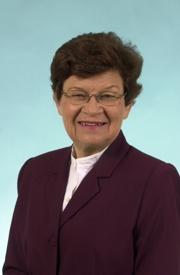
Shirley Sahrmann, PT, PhD, FAPTA
Dr Sahrmann is an associate professor of physical therapy and neurology at Washington University School of Medicine, St Louis Missouri. She received her doctorate in neurobiology from Washington University School of Medicine. Dr Sahrmann is director of the Movement Science Program. She has received Washington University's Outstanding Faculty Award. She is a Catherine Worthington Fellow of the American Physical Therapy Association and is a recipient of the Association's Lucy Blair Service Award and the Marian Williams Research Award. She has served on the APTA's Board of Directors, many committees, task forces, and as President of the Missouri Physical Therapy Association.
Dr Sahrmann, in addition to her numerous national presentations, has been a keynote speaker at the World Confederation of Physical Therapy the Biennial Manipulative Physiotherapist Conference and the Australian and New Zealand annual conferences. Her research interests are control of movement, factors affecting tone, and the classification of patients with movement dysfunction from neurological lesions and with mechanically induced pain syndromes. She maintains an active practice, specializing primarily in patients with musculoskeletal pain syndromes..


Gray Cook MSPT, OCS, CSCS
Gray Cook, a practicing physical therapist, has spent his entire career refining and developing functional evaluation exercise techniques. He has taken the Functional Movement Screen and his advanced assessment practices and combined them with reactive-based exercises that enhance motor learning.
Gray's ability to teach at many different professional levels is the result of his diverse background. He is a board-certified orthopedic clinical specialist with the American Physical Therapy Association. Gray is also a certified strength and conditioning specialist with the National Strength and Conditioning Association. He is a Level I coach with the U. S. Weight Lifting Federation. He combines his clinical skills with many years of professional teaching and lecturing experience.
Gray has lectured nationally and internationally in the fields of physical therapy, sports medicine and performance enhancement. He has served as a consultant to numerous universities and professional sports teams in all four major sports. His is author of the book Athletic Body in Balance which serves as a working example of the unique way Cook looks at assessment, movement, and exercise. He is also the author of numerous text book chapters and articles related to these topics as well.
Gray's consulting is not limited to rehabilitation and sports medicine. He is equally sought after for his advice on conditioning and performance enhancement. Gray currently practices physical therapy in Southwest Virginia and continues to publish and present topics related to rehabilitation and exercise. He is also part of the Perform Better expert consulting faculty and an instructor with the North American Sports Medicine Institute.
You can check out his website at FunctionalMovement.com


________________________________________________________________________________
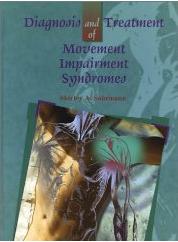
I found this presentation on the web by Witaya Mathiyakom, PT, PhD based on the work of Dr. Sahrmann. Thought it was pretty good and defines/describes many of the terms she uses in the interview and in her book. You can check it out by clicking this link: Movement Impairment Syndromes of the Shoulder and Shoulder Girdle
The Craig's Test (as shown here by Charlie Weingroff) is a great way to determine the angle of torsion of the femur which will aid in exercise selection when it comes to restoring mobility of the hip and stability of the lumbar spine. The test is positive if the angle measured is outside the normal range of 8--15°. Excessively greater than 15° is femoral anteversion (internal torsion) and excessively less than 8° is femoral retroversion (external torsion).
Shirley talks in the interview about looking at the structure of joints to help determine the treatment, and this is one case where it is quite important. Hip mobility has become the 'cure' if you will for everything out there nowadays. In some cases, re-establishing full hip ROM will go a long way toward solving the patient's issue. In other cases, pushing to normalize motion in a hip joint that is not structurally capable may cause more problems.
________________________________________________________________________________
The video goes over the Shoulder Mobility screen and how quickly shoulder mobility can be improved by attacking thoracic spine mobility. This is a perfect example of why Gray says, "stop chasing the pain"! Why force shoulder internal rotation ROM when you can go after thoracic spine first. Not to mention addressing any loss of cervical spine mobility or loss of stability through the spine and scapulae. Correcting the non-painful dysfunctions first, can result in a Painful and Dysfunctional movement pattern becoming Non-Painful and Functional.
Functional Movement Taping for the Knee and Ankle - these short clips from Gray's DVD on Functional Movement Taping give great insight into how he uses mobilizations and reinforces with taping to improve mobility. Corrective exercises are then used to integrate the new mobility back into functional patterns such as the squat and lunge.
***There is no sound the first minute of the first video. Never said Gray was a tech genius.***
For more on the FMS and SFMA, check out the links below. I've put them in the 'Sample Articles' so everyone can check them out.
Thanks for checking out the interview. Let me know what you thought!
Joe Heiler [email protected]