

Movement Reserve: Enhancing the Physiological Buffer Zone
Patrick Ward MS, CSCS, LMT
There has been, and always will be, much debate about why athletes get injured. This is the holy grail question that keeps researchers busy in the lab, coaches scratching their heads, and athletes constantly frustrated.
Injuries are a complicated event and usually cannot be linked to one single variable (aside from a contact injury). In my mind, I think of three main categories that influence the state of the athlete:
1. Stress Overload 2. Poor Fitness 3. Poor Movement
The first two have been discussed before in previous blog entries. Obviously, we should be doing everything we can to try and monitor and manage the stress and fatigue of the athlete to ensure that they are in an optimal state of readiness for their competitive season. Part of being able to tolerate the stresses of practice and the game is being in shape. Plain and simple, being out of shape is huge problem! An athlete can have an amazing movement capacity but if they are unfit the chances of them being able to sufficiently use their movement throughout the course of a game, as fatigue sets in, will drastically be reduced. Additionally, athletes who do not possess a level of basic general strength (which is a component of fitness) will lack the ability to tolerate the stress of the season.
Poor movement is an interesting addition to the puzzle and one that has come under scrutiny lately as many want to take shots at the idea that having a decent movement base to draw from can potentially limit your chances of getting injured.
I tend to see many of these arguments being one-sided, with advocates arguing either for or against the issue. I'd rather take the middle ground and say that (a) we probably don't know exactly why most injuries happen and (b) it is probably a combination of all of the things above instead of just taking a myopic view and saying that one thing is the only thing or one thing is more important than anything else. As stated earlier, if you have great movement but poor fitness, you are no more bullet proof than the guy with great fitness but less of a movement base.
Theory of Movement Reserve
With all of this in mind it led me to come up with my idea of what I call movement reserve.
What this basically means is that the athletes who do have a well-developed movement capacity appear to have a little bit larger physiological buffer zone when the circumstances are not perfect and the stars are not all aligned.
Obviously we do all we can to manage stress but no situation is 100% perfect. If the team has to fly across country, the plane is delayed getting in, everyone misses dinner, and then they don't get a good night sleep, the head coach cannot just go to the other head coach and say, "Our team is really exhausted. Do you think we can put the game off until tomorrow so that we have another day to rest?" It just doesn't happen! And, as an athlete, if a coach says "you have to play"…you have to play! Even if that means you are a little bit tired, the HRV numbers are poor, and your level of stress is high.
In these instances, when there is more fatigue/stress than usual and when their body is not fully recovered/rested, it is the athlete with better movement capacity (and better general strength) that can get in the game and challenge their bodies knowing that their physiological buffer zone is a little bit greater than the guy who, when trying to push himself and operate under a high level of fatigue, doesn't have the ability to manage his bodies ranges of motion and joint positions.
In a nut shell, when the chips are on the line, when the athlete starts to fatigue those with the greater movement capacity have some movement reserve to fall back on. I believe that this may be one of the reasons why when looking at the research on the Functional Movement Screen it appears to be most valid in the NFL population. This is a group of people who are trying to push their body to the max limit of its capacity and do so under some considerable amount of fatigue.
If you take the time to do all of the things above:
you have a much better chance (in my opinion at least) to keep athletes as healthy as possible.
Look at all the factors of the athlete and try not to get stuck in the black & white arguments. Nothing in the body is as simple as that. Allow the body to express its complexity and embrace the grey area between the black & white by accepting the fact that no one has all of the answers (and maybe never will).
Bio
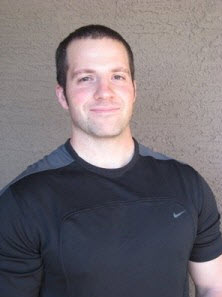
In 2006 Patrick created Optimum Sports Performance LLC and opened his training facility in the summer of 2009 in Tempe, AZ. He runs the popular blog site: OptimumSportsPerformance, and is also co-host of the Reality Based Fitness Podcast.
Patrick has been working in the field of strength and conditioning field for over 8 years. He is also a licensed massage therapist in the State of Arizona, specializing in clinical, therapeutic, orthopedic and sports massage. He is certified in Neuromuscular Therapy (NMT), Active Release Techniques (ART) for the Upper Extremity and Functional Movement Screen (FMS).
His professional experience working with a diverse clientele includes training and massage therapy for optimal health, injury or post-surgery rehabilitation, injury prevention and optimal athletic performance. He has served as a strength and conditioning consultant for various athletes of all ages and status. Prior to starting Optimum Sports Performance, Patrick was a top-level fitness and human performance coach in New York City, where he also presented seminars and clinics for other fitness professionals.
Patrick hold a Masters Degree in Exercise Science, and is a Certified Strength and Conditioning Specialist through the National Strength and Conditioning Association, a Titleist Performance Institute Certified Golf Fitness Instructor, Certified Personal Trainer and Performance Enhancement Specialist through National Academy of Sports Medicine, and a USA Weightlifting-Certified Coach.
 del.icio.us
 Digg
 Reddit
 Facebook
 StumbleUpon
 GoogleBookmark
 Technorati
 Furl