How To Get on the Radar of your Future Sports Employer
Most Peoples Favorite Subject is Themselves
And its not just me that thinks this, there's research to back this up. On average, 60 % of conversations are spent with people talking about themselves. This increases to around 80 % when communicating via social media.
So if this is true, so what? We can use this to our advantage……
The art is spending time researching our intended future employer and building some background information. [Where they've studied, what they've studied, any research or special interests they may have or any material they might have produced].
This is by no means an exhaustive list but any easy one at that. A simple internet search will help you find most of the above.
But why is this this information helpful?
One reason is that it helps you build your first interaction with your potential future sports employer. The likelihood of nailing down an opportunity in sport by just asking for one is minimal. Due to the shear number of requests sports professionals get we can't accommodate everyone and as such are only likely to reward those we consider to be of greatest value.
Compare these two requests.
One just straight up asks for an opportunity. This might be for a placement, a shadowing experience or even a job. The second, makes contact starting their contact with something like
‘I read your recent blog post on……..' or ‘I see that you studied your MSc at the University of'……… or ‘I noticed that you've got experience working with'……. and off the back of this can ask a question. It's probably not too hard to work out which example is most likely to get a positive reply. Most attempts like the first one don't usually get a reply at all, or a best get a copy and pasted ready made reply sent back.
The main difference between the two is that one shows us that you have taken the time, effort and put some thought into your initial approach. The other implies you've just copied and pasted a request that you've sent to a 100 other clubs. Making it personal to the person you are contacting is key. If you ask a direct question your likely to get a direct response. That's how you can start to build rapport. Then down the track, when the time comes to ask for an opportunity your chances of success will be markedly improved.
Remember above all else, most people's favourite subject is themselves, so do your research and make it personal.
Ask Better Questions To Get Better Answers
This follows on nicely from #1.
The quality of the questions we ask will determine the quality of the responses we get. If you've taken the time to research your intended contact, you will be able to attain enough information to ask an informed and direct question. The subject of this question isn't really that important. If it is personal and relative to the information you have attained via your research.
So, what makes a great question?
Different functions will require different types of questions. As such it's not just about having a set of questions! It's about asking the right person, the right question at the right time for the right reasons. A great way is to ask an open question, but with direction.
Open questions cannot be answered with a YES or NO response. As such they require some degree of thought and allow and opportunity for multiple responses.
However, open questions must have direction. If the question is too open the reader might be unsure on what you are asking or equally reply with a response having misunderstand the intended question.
Compare these two questions;
1. How would you manage an ACL injury?
2. I saw a recent video (link to video) you posted which showed some jump and land rehab you were doing with a player post ACL reconstruction. How might you look at progressing that drill?
More than anything, the first question is too open, too broad.
To a detail 6-9 months ACL management plan is a BIG job and as such something that I'm likely NOT going to do.
The second question is very direct. It relates to a specific exercise and asks a simple question that would be easily responded to. They've even taken the time to post the link, just in case I'm unsure which drill they are referring to. Furthermore, this question would likely be something that might build into an ongoing conversation, helping build rapport and a relationship between yourself and the sports professional you have contacted.
This is a simple thing and so easy to do but can be one failure many aspiring sports professionals make. So, before you send out your next email to a potential sports employer, ask yourself; Is my question worth answering?
Be CV Ready
You'll never get on the radar of any potential sports employer if your CV isn't ready to rock and roll. What if you saw a job this evening, which closed tomorrow, but your CV wasn't ready to send?
You'd have two options;
1. Send the last one you updated – might bear little relevance to the job, doesn't particularly match the job specification and therefore probably won't get you an interview
2. Spend half the night updating your previous CV, being half asleep miss most of the important content you would have liked to have included and as a result also probably not get an interview.
Or I guess you could not send it at all.
In all three cases you're not going to get that call for the interview. One fundamental flaw aspiring sports professionals also make is NOT making their CV match the job description of the role they are applying for.
This is woeful!!!
The job description is telling you WHAT the club want from YOU and WHAT roles and responsibilities your job would involve. The more closely you can match YOUR skills and attributes to the CLUB'S essential and desirable criteria the more of a match you are likely to be. Remember, no two jobs in sport are the same and as such you need to modify your CV to suit. But, having the main bulk of your CV ready to go ensures you can spend time pairing your own qualities and qualifications to best meet those required by the club you are applying to.
Remember your CV is a professional document so give it the time and attention it deserves. Your CV can change your life for the better and land you that job working in professional sport. Remember also that your CV might be the first contact you have made with that club and as such you want to make a great impression. As such it's not something you should throw together hastily.
A poor CV might be why you've been left frustrated with the inability to get your foot in the door of a professional sports club and seemingly feeling disillusioned by the prospect of ever working in professional sport.
Timing Is Everything
Any professional working in sport will tell you how hectic some weeks can be. The week leading up to the first game of the season, the week where you have 3 fixtures in 7 days or that upcoming final. These are NOT the weeks to contact sports professionals looking for that opportunity. Making contact during such times will heighten your chances of being unsuccessful so pick your time wisely.
One reason you might have got an unsuccessful response in the past might just be because of your timing; it might have been the right thing but just the wrong time. You need to do your research so you know what is going on at the club at that particular time. The number of requests I've had for opportunities from aspiring sports professionals that have no idea of the time of season is unbelievable.
People asking for a placement during our ‘offseason' period when we are actually in the middle of our season is not uncommon. This just screams… I haven't been bothered to take the time to have a look at what is going on at your club at this time…..
Is this someone that is likely then to get given the opportunity to come into the ‘bubble' of a professional sports environment and beat off the competition of others seeking the same opportunity.
What Is The Worst That Could Happen?
What is the worst that could happen if you reach out to sports professionals for that opportunity?
The worst is that you get a NO.
If you took no action and didn't engage with those sports professionals, you'd also get the same response…. NO. So, do you have that much to lose?
You could well and truly F*%$ it up for yourself at a club if you make a poor approach (think poor timing, weak CV, poor questioning and poor initial approach) but with a bit of work you can avoid this. There are many barriers facing you and, in your way, preventing you a job in professional sport. There are many others vying for the same roles, at the same time as you. The best candidates don't always get the opportunities. The best opportunities are given to those that show the greatest desire to take action long before the interview room.
There is so much you can do NOW to make your path into sport easier and get your foot in the door of a professional sports club.
BIO
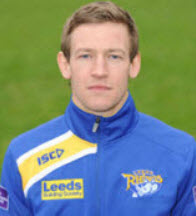
Andy is the current head physiotherapist for the Leeds Rhinos first team squad and has been involved with the club for the past six seasons.
He graduated in Physiotherapy from the University of Bradford with a first class honours degree which followed on from a previous Bachelor of Science degree from Leeds Metropolitan University in Sports Performance Coaching.
Andy currently works privately in addition to his sporting work and has also previous experience within National League basketball and professional golf.
Andy has a keen interest in injury prevention and the biomechanics of movement in which he is continuing his studies with the start of a MSc degree later this year in Sports and Exercise Biomechanics.
Andy is also the creator and author of rehabroom.co.uk. RehabRoom is a free online rehab resource site aimed at but not exclusive to physiotherapists, strength and conditioning coaches and personal trainers. To visit the site please click the link; www.rehabroom.co.uk