

Most Popular Articles on this site
Reader Favorites
The list shows the most widely read articles on this site.
- Exercise of the Week - Pallof Press
Joe Heiler PT, CSCS The Pallof Press (named after the PT John Pallof) has been made quite popular by guys like Eric Cressey and Mike Robertson. It's a great anti-rotation exercise that can easily be used with athletes or any patient for that manner. It's a tremendous challenge to hip and core stability which is exactly what most of our athletes need, especially those that rotate for a living....keep reading
- Manual Therapy Technique of the Week - Treating Gluteus Medius and Gluteus Minimus Trigger Points
Joe Heiler PT, CSCS When it comes to Gluteus Medius, most folks think it just needs to be strengthened. Gluteus Minimus is usually forgotten all together. Both of these muscles are actually prime locations for active trigger points that can refer pain to the SI joint, IT band, knee, and mimic sciatica. Trigger points are also thought to alter the motor control of the muscle(s) in question so this is a very important area to assess when working with a patient or athlete who presents with SI, leg, or knee symptoms....keep reading
- Nordic Hamstring Curl vs. GHR Hamstring Curl

People often confuse the Nordic Hamstring Curl and the GHR Hamstring Curl. The intent and the exercise itself has some subtle difference that make a large impact on how its programmed!...keep reading
- SFMA and Anatomy Trains: Concepts For Assessment and Treatment

Patrick Ward There are many ways to assess clients prior to a soft tissue therapy session -- posture, range of motion (active and passive), manual muscle testing, etc -- however, it is my opinion that evaluating movement is an often overlooked component to assessment for the majority of massage therapists out there. With this article, I will attempt to blend the concepts of two great teachers, Gray Cook and Thomas Myers, and draw correlations between Myers' Anatomy Trains and Cook's Selective Functional Movement Assessment (SFMA) patterns as a means of establishing a battery of tests and setting up a treatment approach....keep reading
- Core Stability vs Core Strength
Joe Heiler PT, CSCS Core stability and core strength are terms that are often used interchangeably when speaking about training the trunk musculature, whether in the rehab or performance settings. The fact is that they are quite different. Training for core stability requires resisting motion at the lumbar spine through activation of the abdominal musculature as a whole. Training for core strength allows for motions to occur through the lumbar spine in an attempt to work the abdominal musculature, often in an isolated fashion. This may not sound earth shattering but it can be the difference between success and failure when it comes to returning athletes to sports...keep reading
- Dr. Stuart McGill - Teleseminar Interview #5
I wanted to give you an early teleseminar 'present' this year - the #1 interview of all time on the site with over 17,000 downloads! Dr. McGill talks about his spine research methods, provactive testing, corrective exercise, superstiffness, and real life strategies you can implement immediately with your patients and athletes. Plus more on his 'Big 3' exercises and a great article on Super Stiffness....keep reading
- A Joint-By-Joint Approach to Training

Mike Boyle MA, ATC In a recent conversation about the effect of training on the body, Cook produced one of the most lucid thought processes I have ever heard. Gray and I were discussing the findings of the Functional Movement Screen (www.functionalmovement.com), the needs of the different joints of the body, and how the function of the joints relates to training. One of the beauties of the Functional Movement Screen is that the screen allows us to distinguish between issues of stability and those of mobility. Cook's thoughts were simple and led me to realize that the future of training may be a joint-by-joint approach rather than a movement-based approach....keep reading
- Three Mistakes With Chest Supported Rows
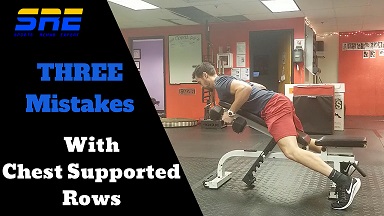
We all are well aware of the benefits to including multiple rowing variations into clients programs. The chest supported row is one of my favorites to include in programs, however often I will see it butchered by other clinicians, athletes, and gym goers....keep reading
- The Ultimate Guide to Recovering from Hip Impingement Without Surgery
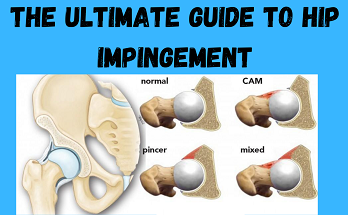
Hip Impingement (also known as FAI) can be a major frustration for athletes and active individuals. This article is designed to be a resource for providing the best holistic treatment approach to help you resolve this issue.|Image1|...keep reading
- The Ultimate Guide To Fixing Knee Valgus
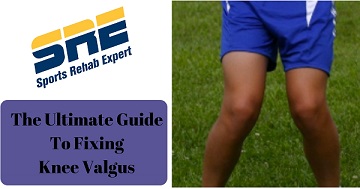
We have all heard someone describing a person as "knock kneed"...Or seen the individual with a limited ability to control the knee while jumping, landing, cutting, squatting etc....keep reading
- Achilles Rupture Rehab - Getting To A Single Leg Heel Raise

The single leg heel raise is a large milestone of recovery for someone post Achilles Tendon Repair...keep reading
- Upper Extremity/Trunk Stability Test using the Y Balance Test
Phil Plisky PT, DSc, OCS, ATC, CSCS The Y Balance Test has been a great addition to our clinic testing athletes for return to play. Now we have an upper extremity/trunk stability test to go along with it. Check out the video and testing protocol. As Phil gets more data on norms, what constitutes significant asymmetry, etc. I'll get that out....keep reading
- How To Perform Face Pulls Correctly
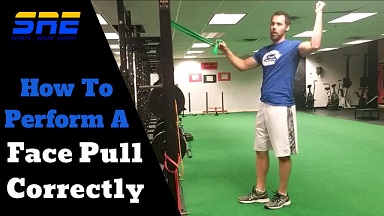
This is a tutorial on how to perform the face pull correctly and some common mistakes....keep reading
- Elbow Pain With Pullups and Barbell Curls
Many people experience medial elbow pain (pain on the inside of the elbow) when performing pull ups, chin ups, or barbell curls....keep reading
- The Best Anterior Core Exercise

The wall press ab exercise is an essential anterior core exercise that you should learn how to include and program into many rehabilitation and performance programs....keep reading
- Cervical Spine Rotation Assessment

Dr. Eric May When assessing the body, there are few orthopedic physical tests that have good validity, sensitivity and specificity. This holds true in the cervical spine as well. It is important to determine which tests may be helpful in ruling in or ruling out a given pathology or dysfunctional segment. The following discussion will consist of two tests that have been shown to be of credible use in the cervical spine....keep reading
- Dr. Jim Stray-Gundersen and Bstrong

Jim Stray-Gundersen was a pleasure to have on this years Sports Rehab to Performance Teleseminar! His background as a surgeon, plus his cardiovascular physiology fellowship made it especially unique when he got on the topic of blood flow restriction training. He went on to discuss how he originally got started in blood flow restriction training through a method called KAATSU, which had been around long before blood flow restriction training became such a hot topic. He shared with me that a lot of the research being pulled to reference this type of training is actually the work of KAATSU. This ultimately led to him developing the B STRONG bands he uses for blood flow restriction training....keep reading
- Human Assessment Mastery Course

Master the Most Time Consuming Part of Treatment to Efficiently and Reliably Pinpoint the Primary Pain Generator and Establish an Effective Plan of Care!...keep reading
- Treatment Domination Course
Dominate Your Treatment Sessions and the Competition! Be Recognized as the Go-To Expert that Can Solve Even the Most Difficult Cases, No Matter The Diagnosis. Allowing You To Get Better R...keep reading
- More on the Functional Movement Screen and Y Balance Test

Joe Heiler PT, CSCS I've got an article coming out in October in Physical Therapy Products dealing with designing strength training programs based on results from the FMS and Y Balance Test . This page is to give more insight into what these two screening systems are all about. It's hard to do a good job in 1,800 words so here is a little extra reading for all their subscribers. For current members I have updated things a bit when it comes to the order in which to break down the FMS so you may want to check that out. If you are relatively new to the site be sure to catch two of the older "Exercises of the Week" that have to do with correcting the Shoulder Mobility and Hurdle Step screens....keep reading