

Most Popular Articles on this site
Reader Favorites
The list shows the most widely read articles on this site.
- Audio Interview with Jaime Holt
Jaime is the physical therapist with the Carolina Hurricanes of the NHL, and will discuss common hockey injuries especially to the groin and low back, typical movement impairments that lead to these injuries, how he uses the Titleist Performance Institute screen with the hockey players, and just some great all around advice for working with this population from the youth athletes up through the professionals....keep reading
- Stretching for Hip Internal Rotation
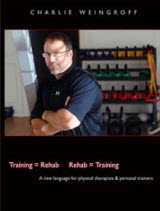
Charlie Weingroff A loss of hip IR can be difficult to recover, and is a topic my students and I have been covering lately. This is an article from Charlie Weingroff last year covering this topic especially trying to regain mobility through exercise. Enjoy!...keep reading
- Deceleration Series (Part 2/5)

Greg Schaible DPT, CSCS These are the next two drills in the deceleration series. A "Forward Hop and Pause", followed by a "Crossover Shuffle with Pause"....keep reading
- Expert Profile: Eric Cressey
Eric Cressey/Erin Weiss-Trainor Personally I love to hear other people's success stories. It has always been motivating to me to become a better therapist and coach. Since Eric has been a contributor since the beginning, we'll feature a 'Day in the Life of..' segment on him. This was originally posted at Precision Nutrition.com with whom Eric does a lot of work with as well....keep reading
- Lateral Shuffle Progression
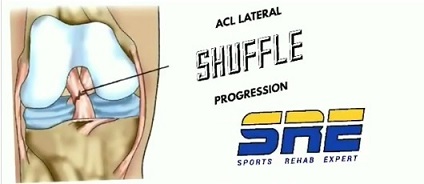
Three big bang for your buck exercises to teach lateral shuffle in an athlete as well as include in rehab programs....keep reading
- Aquatic Movement Screening

Rick McAvoy PT, DPT, CSCS Movement screening continues to gain popularity in both the fields of rehabilitation and sports performance. Using the water as a movement screen is something that I incorporate it into every athlete's aquatic training session and have discovered it to be very beneficial. A few reasons why:...keep reading
- FMS Unplugged - Why Split Squat
It's been awhile since I've featured one of Gray's 'unplugged' videos but this fits in nicely with last week's featured exercise - the overhead deep squat. The split squat can also be performed with a loaded overhead component as Gray will discuss in this video......keep reading
- High Bar Isometric Single Leg Hamstring

Andy Barker PT If you've read some of my previous posts you will know I am a big fan of hamstring strengthening exercises. The video below shows a high bar isometric single leg hamstring exercise. I like to work isometrically prior to concentric and eccentric movements, before progressing to movements that involve all 3 types of muscular contraction....keep reading
- 3D AiM Hip Flexor Stretch

Andy Barker PT This is an exercise borrowed from 'Anatomy in Motion.' Using a gait stance, you can see the movement to stretch the back leg's hip flexors via hip extension, sagittal plane, a shift of the hips across to the right side of the body, adding a frontal plane stretch and finally adding rotation with the upper limbs adds a stretch to the muscles in the transverse plane. Therefore, hitting all three planes with one stretch....keep reading
- Bear Crawling Progressions - Part 2

This is part 2 in my bear crawling progressions. These are the type of exercises that are running through my head when working with clients. Often times we can get caught up in the amount of variations at hand for any given exercise. The bear crawl is no different. I tend to find a few that I am very fond of, then figure out ways to make it easier or harder depending on the client....keep reading
- Pain and Motor Control Theory

Kyle Kiesel PT, PhD, ATC, CSCS Great lecture by Kyle going through the latest research on motor control theory and how it's affected by pain. If you've taken an SFMA course then you've heard quite a bit of this before, but personally I don't think you can hear it too many times. I'll be doing a webinar on Wednesday covering the 4x4 matrix which is used to prescribe and progress corrective exercise to address stability and motor control dysfunction. This would be a great review for that as well....keep reading
- Perform Better Summit - Long Beach - Part II

Kevin Fay DPT, CSCS As you can imagine, it was a fantastic 3 day weekend of networking, interacting and learning at the Perform Better Functional Training Summit in Long Beach. Chris Poirier and his Perform Better staff put on a first class workshop and the presenters were top notch. If there is such a thing as an "Educational Hangover", I believe I had it last week. Nevertheless, I agree with Joe that it's good to share some knowledge with the others on this site whenever possible following attendance at a workshop/conference....keep reading
- Why Making Exercises Harder Can Make the Exercise Itself Worse

Andy Barker PT Quite a long winded title but the aim of this article is to try shed some light on how exercise progressions can be of detriment and in turn nullify the purpose of the exercise itself. To do this I am going to use the abdominal rollout as an example. The rollout itself is an anterior core exercise and can be completed in many ways; ab wheel, gym-ball and barbell being the main ones. The rollout is a great exercise to engage the anterior core but only if completed correctly. In my experience unless coached well this exercise gets completely butchered. One of the most common faults or 'cheats' is when athletes excessively extend their lumbar spines as their body rolls forwards....keep reading
- Push-Up Part 2
Mike Robertson Now that we've covered a ton of different push-up variations, let's break down the form and technique errors that we see most often in the gym. Lack of a neutral spinal alignment is one of the biggest issues we see when training clients or athletes. Sometimes they never get there to begin with, and others lose it at some point during the set. Here are some of my favorite coaching cues to make sure someone gets (and stays!) where you want them, depending on where they're breaking down....keep reading
- What is Our Baseline for Movement? - Gray Cook's 2012 IFOMPT Keynote Address
The 2012 International Federation of Orthopaedic Manipulative Physical Therapists Conference was held in Quebec in October 2012. Gray Cook was a keynote speaker. His talk, which provides an overview of his current thinking of Functional Movement Systems, was recorded and provided to us by the Canadian Physical Therapists Association, which you'll find at physiotherapy.ca. Big thanks to Laree Draper at MovementLectures.com for sending this over. You can catch the audio here plus I've got links to download the interview and transcripts. ......keep reading
- Shoulder GIRD and Total ROM
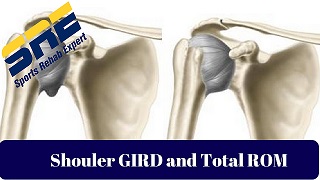
This weeks Q/A session came from a reader who wanted to learn more about shoulder GIRD. We also had another reader ask about the concept of Total Shoulder ROM. I felt both would be good to discuss together as it's more of a transition in the way of thinking as our understanding of the shoulder has improved. The whole idea of shoulder GIRD appears to be going away in favor of the concept for total shoulder ROM....keep reading
Displaying Matches 1201 thru 1220 of 1468 Found FIRSTBACK NEXTLAST