

Most Popular Articles on this site
Reader Favorites
The list shows the most widely read articles on this site.
- Why Are Asymmetries Important?
Gray Cook I still hear a lot of concern or confusion over asymmetry, even comments that maybe asymmetries aren't so important. I disagree. But we certainly don't expect every human body to be perfectly balanced. There are all kinds of asymmetries, both structural and functional. Sometimes we're born with them, for example a leg-length difference. Sometimes we grow them, either on accident, maybe in our work or in a habitual posture on the couch watching tv. And sometimes we build them on purpose, like professional athletes do as they spend more and more time at their sports....keep reading
- Trigger Points Revisited: Implications For Sport

Patrick Ward MS, CSCS, LMT It has been over 5 years since I wrote my Trigger Point 101 article, which offered a basic explanation of trigger points for strength and conditioning coaches. The article is still one of the most popular on the site and in a recent discussion with Dr. Phil Snell, regarding Trigger Points, I figured I'd circle back around and revisit the topic....keep reading
- Exercise of the Week - Single Leg Overhead Press
Joe Heiler PT Finding new ways to unload an athlete but still get in a good amount of work is always a challenge. Finding lifts the athlete can do in a single leg stance position would be one way to do that....keep reading
- Fluoroscopic Shoulder Investigation - Packing the Shoulder
These videos come from Dr. John DiMuro DO and Mark Toomey RKC who have teamed up to do fluoroscopic investigations of many of the joints of the body with movement and under load. I just interviewed them and will get that up soon, but in the meantime wanted to give you a little preview....keep reading
- Shoulder Special Tests Useful?
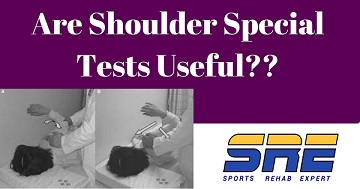
In school we are taught a variety of "Special" tests which are supposed to help us create a diagnosis....keep reading
- Deformation of Human Fascia

Fascia is dense fibrous connective tissue that connects muscles, bones, and organs, forming a continuous network of tissue throughout the body. It plays an important role in transmitting mechanical forces during changes in human posture. Many continuing education courses and programs claim to be able to manipulate the fascia in ways that are therapeutic in nature....keep reading
- Heavy Slow Resistance For Patellar Tendon

We are all very aware of patellar tendon related injuries within the athletic populations, most specifically those that include a lot of jumping. A lot of debate still remains as to what is the treatment of choice with patellar tendon injuries....keep reading
- I Feel Therefore I Move
Dr. Don Reagan, DPT, CSCS, USAW I would like to share a recent clinical epiphany with you that I have found most interesting. It pertains to the relationship between afferent sensory input immediately changing efferent output. In the past, I have competed in strength sports including powerlifting and weightlifting which has left my rotation lacking. I speculate that the bench press or snatch specifically has resulted in a thoracic spine motor control dysfunction specifically in right rotation if you follow the Selective Functional Movement Assessment1 breakout into lumbar locked position logic....keep reading
- Exercise of the Week -
Single Arm Pressing: What to do with the Free Arm?

Andy Barker PT Quite often when athletes conduct a single arm pressing movement their free arm, the arm not involved in the press, is left flailing in the air with athletes not sure what to do with it. Previously, I have instructed athletes to hold the arm across the chest, by their side or behind their head, depending upon the activity or position we are hoping to maintain. For example, those athletes that try to move into excessive lumbar extension during overhead lifting, making them hold their ribcage can help them engage their anterior core and thus limit excessive ribcage and lumbar motion....keep reading
- Audio Interview with Josh Renkens

Josh Renkens DC, ART, MAT Josh discusses his treatment philosophy and business model combining chiropractic with sports performance, his role in the sports medicine team at Vanderbilt University, plus we touch on ART, MAT, corrective exercise for runners, and more...keep reading
- Most Common Mistakes With Throwers Ten Program
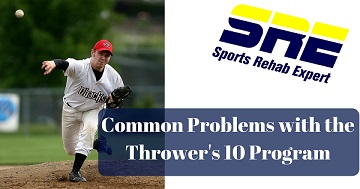
The throwers 10 exercise routine has become a staple within the baseball community as warm up and routine arm care programs. Likewise many strength and conditioning programs as well as general shoulder rehabilitation programs have adopted this same or similar protocol....keep reading
- Self-Treatment: Spinal Decompression Circuit

Andy Barker PT More recently I have been adding spinal decompression work both within and post lifting with some of the athletes I work with. Whilst I have used similar exercises in the past during injury rehabilitation I have found using such exercise with asymptomatic individuals around gym lifting particular to be very advantageous. For some athletes that might occasionally develop lower back pain following a heavy lower limb lifting session, such exercises as shown in the video, have ensured that such symptoms never arise....keep reading
- Tensegrity Principles & Massage Therapy Part 2: Mechanomyography
Patrick Ward MS, CSCS, LMT Movement involves the transmission of forces between various body segments, between body tissues, and across multiple joints. The tensegrity principle would indicate that forces in one area of the body need to be balanced by forces in another area of the body. Because elastic deformation of muscle can influence the structural relationship of soft tissue elements (fascia, muscle, tendon, ligament) it may be possible that massage treatment in one area of the body may influence structures distant to the area of treatment....keep reading
- Functional Training: Missing the Point
Jim Kielbaso MS, CSCS - Total Performance Training Center Something that I'm getting really sick of is the over-use, over-hype, and absolute MIS-use of the term "functional" training. These days, you see trainers literally making up exercises under the guise of being part of the "functional training movement." They think that anything involving multiple planes of motions, a balance component, or unilateral limb use is automatically "functional."...keep reading
- When A Patient Says "I Have A High Pain Tolerance."
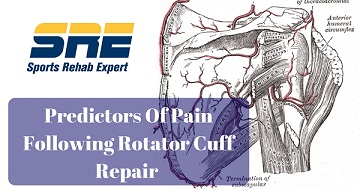
Patients pain levels can be extremely variable post op from various surgeries. This study will look at partial or full thickness rotator cuff repair with subacromial decompression....keep reading
- SportsRehabExpert.com Presents - Audio Interview with Jean-Francois Esculier

JF is a physiotherapist from Quebec City and is an instructor for 'The Running Clinic'. In this interview, JF discusses their course on New Trends in the Prevention of Running Injuries, as well as common causes of running injuries from shoes to training loads to mechanical stresses on the body. He also talks about how his group quantifies mechanical stresses and how to use that information to return to training and running, determining proper footwear using the minimalist Index, and also some ideas on training and running barefoot....keep reading
- Dave Carrier Interview - Part 1
Dave has been the Head Athletic Trainer for the Michigan State University Hockey Team for the past 25 years. In the first part of this interview, Dave talks about how he got started in athletic training, about the osteopathic approach to athletic injuries, and how he applies it to the game of hockey....keep reading
- Overhead Lifting After Injury
Zach Long DTP, SCS We're going to talk a little bit about my three favorite exercises for helping an athlete who's dealt with a shoulder injury return to doing heavy overhead pressing whether that's strict presses, push presses, or jerk variations....keep reading
- Audio Commentary - Teaching the Deadlift Quickly and Effectively
Joe Heiler PT In this month's audio commentary I'm going to cover some of the 'tricks' I've learned over the years to teach the deadlift quickly and effectively. I'll include mobility and stability prerequisites, setting up the lift for success, best cues, plus exercise progressions....keep reading
Displaying Matches 1281 thru 1300 of 1468 Found FIRSTBACK NEXTLAST