

Most Popular Articles on this site
Reader Favorites
The list shows the most widely read articles on this site.
- SFMA - Shoulder Breakouts and Corrections

In this article I'll cover the assessment, breakouts, and corrections from the shoulder patterns of the Selective Functional Movement Assessment....keep reading
- Elite Blog - Movement Proficiency and the Ankle
Joe Heiler PT, CSCS I've already had a few questions come up in response to the first blog post: What are the basic movements that someone should be proficient with to train and compete in athletics? What are some ways to address these movements in my training? There are quite a few movements I feel are quite necessary to move well enough to keep injury risk low and to enhance speed, power, jumping ability, etc. I'll get into all of them in time, but for now I'm going to spend more time on the 'Big 3' from the Functional Movement Screen....keep reading
- 2012 Teleseminar Interview #2 - Cal Dietz

Cal Dietz is one of the best in the business when it comes to training collegiate champions, and he has some great techniques that apply not only to strength and conditioning, but also higher level rehab. Cal will talk about his Triphasic undulating training model, submaximal high velocity training methods, the role of the CNS, applying strength and conditioning principles to injury prevention and rehab, and much more......keep reading
- 2014 Teleseminar Interview #6 - The Strength and Conditioning Round Table

I wanted to try something a little different for this interview and get 3 of the best strength and conditioning coaches on the phone at the same time to ask them what they see as the biggest advances in athletic development over the past 5 years, some changes they would like to see, what is the future direction of the industry, as well as some great advice for others in the field. We came close with Charlie Weingroff and Nick Winkelman in part I of the interview, and I was able to catch up with Patrick Ward for part II. Some great ideas and advice from 3 awesome coaches....keep reading
- Manual Therapy Technique of the Week - Graston Technique and the Front Arm Line

One of the nice things about using IASTM (in this case Graston Technique) is that I can cover a large area of tissue in a relatively short amount of time. Here we talk about treating out the anterior arm lines as discussed in Thomas Myers' book Anatomy Trains....keep reading
- Function?

Gray Cook We should all own a little of the famous Forrest Gump saying Stupid is as Stupid Does. I like that little saying because it keeps me in check. It makes me consider if what I'm doing is consistent with what I believe. We can all use a little dose humility sometimes, and I have a great example for you. We've all spouted out the term function at some point in our careers--the stupid part is in not clearly defining function first. Whether for or against the term, we'd better define it before we champion or bash it. It's our professional responsibility and personally I'm not satisfied with all our inconsistencies....keep reading
- Super Stiffness
Stuart McGill, Professor of Spine Biomechanics At a gymnastics or martial arts meet, or at a weightlifting competition, listen to the coaches advice to the athlete -- Stay tight! This means to maintain stiffness. Being stiff ensures that there will be minimal energy losses as forces are transmitted through the linkages. Optimal performance requires stability, and stability results from stiffness. Stiffness in the body results from muscular co-contraction. Used properly, it will assist in getting through "sticking points", enhance whole body strength and speed. Be stiff, and be compliant. Knowing the difference and when to be one or the other is a major way to improving performance....keep reading
- Case Study #1 - Distal IT Band Syndrome
Joe Heiler PT, CSCS It's been awhile since I've posted a case study, but I wanted to go back to this format in an effort to bring multiple systems together and show how they can work effectively as part of a comprehensive treatment program. The Selective Functional Movement Assessment (SFMA) has been my guide over the past few years, but I certainly use other assessments like McKenzie Method for back and neck pain, some of the DNS testing for breathing and moving patterns, as well as components of Shirley Sahrmann's Movement Impairment Syndromes assessment. I'm sure you'll see a bit of each worked into the case studies, although this first one is more straight SFMA, as well as some different manual therapy techniques and corrective exercises. Hope you get a lot out of this!...keep reading
- Audio Interview with Jackie Shakar - Graston Technique

In this interview, Jackie discusses the basis for instrument assisted soft tissue mobilization (IASTM), how Graston is unique and effective as a soft tissue modality, the most recent research, as well as describing some very effective techniques at the hip and shoulder. I've also re-posted her article: "Graston Technique Enables Runner With 4 Year History of Hamstring Tendonopathy and Plantar Fasciosis to Train for the 2008 Boston Marathon"...keep reading
- 2013 Teleseminar Interview #2 - Diane Lee

I've been hoping to have Linda Joy Lee on the teleseminar the past couple years now to talk about her treatment model and thoracic rings approach. Unfortunately things have not worked out due to unforeseen events and through no fault of her own. I do really like what she and her colleague Diane Lee have to offer so I'm re-posting my interview with Diane from 2013 just to stay in the same ballpark with this week's topic. Diane is just a fantastic therapist and really an expert when it comes to the lumbo-pelvic-hip complex. Enjoy the interview and hopefully next week I'll be back on schedule with Gary Gray!...keep reading
- Gaining vs Sustaining - Thoracic Abduction
Brian LeRiche CSCS The importance of thoracic abduction was introduced to me by James Anderson of the Postural Restoration Institute (PRI). I quickly realized that too often PRI practitioners place too much emphasis on a left zone of apposition (ZOA), and over-look the right ZOA. Over emphasis of the left allows us to lose awareness, position, and contraction of the right......keep reading
- Are We Giving Athletes What THEY Want?

Andy Barker PT Just the other week it was Mental Health Awareness Week here in the UK. It got me thinking about mental health and in particular the influence such issues have on today's athletes and patients. This article refers to this and emphasises how a global approach to athlete health and well-being is key to any management plan....keep reading
- Higher Level Closed Kinetic Chain Tests -- Part 2

Phil Plisky PT, DSc, OCS, ATC, CSCS In previous posts, I discussed why we would consider testing an athlete in an open-kinetic chain sport with a closed-kinetic chain test. Then, I discussed the hierarchy of testing and began with the Functional Movement Screen Trunk Stability Push Up and the Upper Quarter Y Balance test as basic tests of movement competency, motor control competency, and motor control capacity. Now we will examine another test that looks at capacity -- the Closed Kinetic Chain Upper Extremity Stability Test....keep reading
- Teleseminar Interview #9 - Eric Cressey
Eric Cressey's passions are baseball and weight lifting, and he blends the two seamlessly. This would have been sacrilege in the past, but he turns out one great player after another and they stay injury free. In this interview Eric discusses his DVD Assess and Correct, how and when he uses mobility drills in the workout plus some great upper and lower body examples, de-loading and in-season training, "take home" messages from his recent seminar with Mike Reinold, using sleds for power development, some business device, and lots more......keep reading
- 12 Rehab and Training Myths
This training is designed to help clear up 12 of the most common traps that rehab clinicians and strength coaches fall into...Because avoiding these traps will lead to better results, more trust, and establish you as the expert in your area no matter your profession (Physical Therapist, Athletic Trainer, Chiropractor, or Strength Coach)....keep reading
- Case Study: Hip Shift During A Squat Corrections
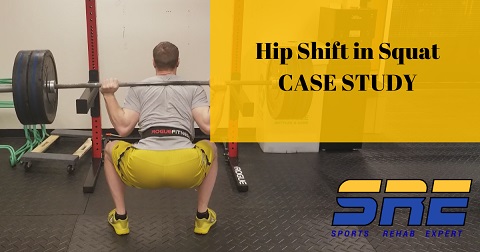
The hip shift with a squat is a very common thing that trainers and clinicians who work with athletes and gym goers see. As a result, knowing how to manage this is HUGE...keep reading
- Teleseminar Interview #5 - Brian Mulligan

Brian Mulligan literally wrote the book on joint mobilization and will discuss his mobilization techniques, his evaluation process, how to know immediately if the selected mobilization will work, taping techniques, and some sample techniques including at the hip (these techniques are only available in the most recent edition of his book)...keep reading
- 2013 Teleseminar Interview #8 - Neil Rampe

Reposting this interview, great one to review or check out if you haven't had a listen to it before! Neil is one of only a few people who have been through both the Dynamic Neuromuscular Stabilization (DNS) and Postural Restoration Institute (PRI) systems. Neil will discuss how he uses both of these systems with his baseball athletes in the rehab and performance settings, how asymmetries can be an advantage for performance but a disadvantage when it comes to injury risk, how he addresses asymmetries using these systems, plus some great strategies you can use to keep your athletes healthy, and more......keep reading
- Taking Care of the Throwing Shoulder for Baseball Pitchers

David Lasnier It will come as no surprise that baseball pitchers are amongst the athletes that put the most stress on their shoulder. The high velocity of the pitches, high number of pitches per game, long baseball seasons, and more often than not, inadequate modalities used to prevent/treat injuries all factor in to the degenerative state of most pitchers' shoulders....keep reading
- Are we getting what we want from the Nordic hamstring exercise?

Andy Barker PT The Nordic or Norwegian hamstring curl has been a staple of hamstring strength training for decades. It provides eccentric load to the hamstring group which we know is great for strength development and has been proven to induce increase strength and power gains. However, the ability of athletes and those using the exercise to complete the exercise well is often not too proven....keep reading
Displaying Matches 321 thru 340 of 1468 Found FIRSTBACK NEXTLAST