

Most Popular Articles on this site
Reader Favorites
The list shows the most widely read articles on this site.
- Audio Commentary - To Squeeze or not to Squeeze? That is the question.
Joe Heiler PT This audio post is a response to questions in the discussion forum concerning the debate about hip bridging and squeezing the glutes (Bret Contreras) or don't squeeze the glutes (Dr. Evan Osar). The response was too lengthy post so I figured an audio response would be a good way to go. Check that out here......keep reading
- Flat Lumbar Spine and Air Pressure
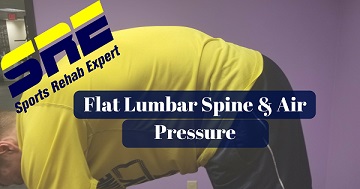
Flat lumbar spine and how air pressure may influence this position. |Image1|...keep reading
- SFMA - Multi-Segmental Rotation Corrections

Joe Heiler In this article I'll cover the assessment, breakouts, and corrections (both manual and exercise based) from the Multi-Segmental Rotation pattern from the Selective Functional Movement Assessment. Much like the extension pattern from last month, there are multiple joints in play here so it pays to have a system in place like this to systematically break it down into the movements component parts....keep reading
- Clinical Pearl: Understanding the Power of Pain Referral

Doug Houle, PT, MSThe knowledge of Functional Dry Needling is a dynamic and powerful adjunct to any physiotherapy treatment toolbox. That being said, the structures to which FDN can be applied to elicit the most beneficial outcome demand that each clinician perform an assessment that will provide the information necessary to make the decision where to apply FDN with the most impact. During the training for FDN1, FDN2 and FT, the importance of having a solid understanding of functional anatomy is emphasized heavily. This is done not only as a reminder of one of our cornerstone requirements as a competent clinician, but to also provide insight into the associated corrective exercises that we can apply as a complement to our needle application....keep reading
- Increasing Patient Compliance

Getting clients to buy-in to what we are teaching them and the treatment we provide is essential for follow through with a plan of care. Low patient buy-in is a recipe for short plan of cares with very limited outcomes....keep reading
- John Garrish 2017 Sports Rehab to Performance Teleseminar

This is interview #4 of the 2017 Sports Rehab to Performance Teleseminar. Today I will be talking with John Garrish. Talking with John you can easily hear the excitement in what he does at the high school strength and conditioning level. The high school strength coach has a unique opportunity to really make an impact in kid's lives and you can tell this is what John enjoys most. In this episode we discuss his various training philosophies, assessment, exercise progressions, and long term development thought processes....keep reading
- Exercises of the Week from Dr. Phillip Snell + DNS in a Functionally Oriented Clinical Practice

Dr. Phillip Snell from MyRehabExercise.com has just posted new DNS based exercises videos on his blog. I've linked to these so be sure to check them out as they are only up on a free page for a limited time. I'm also featuring an article he wrote on how he is using the DNS system clinically and the importance of it's underlying principles. Enjoy!...keep reading
- 2013 Teleseminar Interview #6 - Jason Glass

This week Jason Glass will be discussing 'Rotational Power Slings', not just for golf, but all rotational sports. Jason will also be talking about the Titleist Performance Institute (TPI) screening, corrective exercise, lumbar spine function during golf and other rotational sports, as well as new trends in training. You won't find a more entertaining speaker than Jason plus he's always full of great information you'll be putting to use immediately!...keep reading
- How Athletes Should Catch Their Breath
When an athlete is gassed or winded during practice or sporting competition, you will commonly hear coaches to tell athletes to put their hands on top of their head. Or more commonly, get your hands off of your knees. Why is it then do athletes normally default to putting their hands on their knees and bend over at the waist to catch their breath?...keep reading
- Dynamic Neuromuscular Stabilization: Filling the Gaps

Jeff Cubos In this article Jeff reflects back on what he has learned through the process of completing the DNS program, and how it has helped him to 'fill in the gaps'. Nice discussions on structure versus function, external versus internal loads, the role of the anterior core, our tendency to utilize structure for stability, and a whole lot more. Nice video on Janda's short foot posture as well as some other links to previous articles to help explain these topics on a deeper level....keep reading
- Webinar - Dynamic Shoulder Stabilization
Paul Gorman PTA, ATC, CSCS, RKC Build a strong, athletic shoulder of "elastic steel." A shoulder of "elastic steel" refers to a shoulder that is as strong and stable as steel and at the same time mobile and flexible like elastic. In other words, the kind of shoulder needed for sports. This cutting edge shoulder stability program incorporates total body movement corrections, kettlebell drills, grip strength, breathing, developmental kinesiology and muscle activation retraining to enhance performance....keep reading
- Teleseminar Interview #3 - Greg Roskopf
Greg Roskopf is the creator of Muscle Activation Techniques and will go in-depth with his system, when is it appropriate to go after stability before mobility, case studies highlighting specific techniques to combat common athletic injuries, plus how to integrate MAT into your training or rehab program....keep reading
- Movement System Syndromes of the Knee
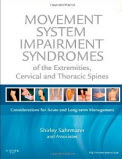
Joe Heiler MSPT, CSCS So here we go again with another chapter breakdown from Shirley Sahrmann's book: Movement System Impairment Syndromes of the Extremities and Cervical and Thoracic Spines. This chapter was definitely one of the easiest reads of the entire book, probably because we see this stuff everyday. Lots of great ideas here so lets get into it....keep reading
- 2013 Teleseminar Interview #4 - Mike Voight and Brandon Gilliam

Mike Voight and Brandon Gilliam will be discussing the 4x4 matrix of the Selective Functional Movement Assessment (SFMA), the science behind it including motor learning research and the neurodevelopmental sequence, how it is used to correct stability/motor control dysfunction in the rehab and performance settings, addressing central versus peripheral asymmetries, and more......keep reading
- Michael Boyle Teleseminar Interview
Teleseminar Interview #3 - Mike Boyle discusses his training methods for maximum performance and injury resistance, his 'Joint by Joint' approach to mobility and stability, ACL injury reduction program, and sports hernia treatment and prevention. Mike is one of the best at bridging the gap from rehab to performance so a 'must listen' for all PT's, ATC's and strength coaches....keep reading
- 2015 Teleseminar Interview #3 - Derek Hansen

In this interview, Derek discusses speed development qualities, strength and power training recommendations, how much strength is enough, common running and sprinting errors plus easy fixes, hamstring injuries and running rehab, other common running injuries and rehab, why front side mechanics are so important, plus a whole lot more......keep reading
- SFMA, the T-Spine, and Cyriax
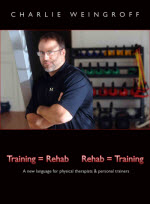
Charlie Weingroff DPT, ATC, CSCS There seems to be a lot of confusion when it comes to looking at the shoulder girdle and t-spine through the lens of the SFMA so this week I wanted to address that a bit. Charlie wrote a great blog post a few weeks back about it, and Greg Rose addressed it at the FMS symposium last weekend so I'll include a bit of that conversation....keep reading
- Exercise of the Week - 4pt. Hip Flexion with Core Activation and Alternating UE Support
We've discussed 4 point rocking with core activation on here before as a correction for the multi-segmental flexion pattern. It's a great exercise for someone struggling with hip flexion mobility, and also for that person that has the mobility but can't work through it in weight bearing positions. Alternating single arm support now brings an anti-rotation component to the table.....keep reading
- What is the Function of Psoas Major?

Andy Barker PT This article will explore the anatomy of the psoas major (PM) muscle and determine the relevance of this muscle to activity and function and how we as clinicians should consider the PM. Firstly, a quick recap regarding the anatomical landmarks relating to the PM. The muscle has two origin sites; anteriorly attaching to the vertebral bodies and discs from levels T12 through to L5 with its posterior attaches originating from the lumbar transverse processes from T12 down to L5....keep reading
Displaying Matches 361 thru 380 of 1468 Found FIRSTBACK NEXTLAST