

Most Popular Articles on this site
Reader Favorites
The list shows the most widely read articles on this site.
- Core Training - Importance of the Diaphragm

Craig Liebenson D.C. Craig runs LA Sports and Spine and lectures in the US and internationally on issues related to back pain. This is an article that he initially wrote for Dynamic Chiropractic back in 07'. We've been talking more and more about the importance of the diaphragm and proper breathing for reactive core stability so I though this would be a great article to post. His stabilization technique is something we've been working on here at Athlete's Performance this week as well so good timing. I'm proud to have Craig on here now as an expert and I'll have more from him to come soon....keep reading
- Hip Retroversion Implications For Hip Pain
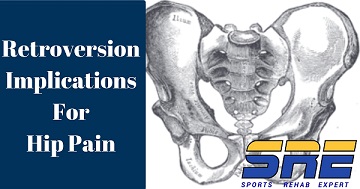
Acetabular retroversion or anteversion has been a topic of debate for quite some time because it is thought to be related to hip pathology. With the two most common problems being femoral acetabular impingement and osteoarthritis at the hip....keep reading
- Course Review - Postural Restoration Institute's MyoKinematic Restoration course
Joe Heiler PT, CSCS I recently took the PRI Myokinematic Restoration course which was very interesting to say the least. I'm going to hit some of the highlights of the course to get you all thinking about the possibilities that PRI brings to the table. I'm already trying to integrate this with the SFMA, and seeing some great results with cases I used to struggle with....keep reading
- Manual Technique of the Week - Prone Hip Extension Mobilization
Joe Heiler Ok, so this is the second manual technique of the week - trying to get Carson's webinar loaded but no luck yet! It does fit in nicely with the hip external rotation mobilization since I talked about how the extension and rotation patterns so often going hand in hand......keep reading
- Why you should use seated calf raise in Achilles tendinopathy

Non uniform Achilles load and why all roads lead to the seated calf raise What they did: There has been lots of interest recently in non-uniform loading of the Achilles tendon (AT) and whether this relates to injury. Here is a brief run down of key points....keep reading
- Exercise of the Week - Thoracic Spine Mobilization with Movement - Tim DiFrancesco

Tim DiFrancesco PT, DPT, ATC, CSCS, AQx CMT We are all aware of how important thoracic spine mobility is in an individual with healthy movement patterns and kinetic linking. The Joint by Joint Approach by Mike Boyle and Gray Cook explains this perfectly. When assessing thoracic spine mobility I prefer to have the patient in a side-lying position with the patient's hands interlocked behind their neck. When doing this I use the patient's elbows as a lever to guide the thoracic spine into extension and assess for how much gapping occurs between each level...keep reading
- Hip Flexion Mobilization in 4 Point
This one comes to us courtesy of David O'Sullivan in response to the Multi-Segmental Flexion article I put up last week. I thought this was a great idea to get hip flexion in a loaded position. Check out the forum post, the video is in there too, but wanted to make sure everyone got a chance to check it out....keep reading
- Maintain the Squat - Train the Deadlift

Gray Cook MSPT, OCS, CSCS - Balanced Body Series The purpose of this article is to describe and discuss the importance of utilizing the deadlift as an integral part of any strengthening program. This article is not simply designed to educate the strength coach or performance enhancement specialist, or even the fan of free weight training. This article is designed for the personal trainer, physical therapist and athletic trainer, who often find themselves in situations requiring a functional approach to strength training....keep reading
- The Balloon: Your New Clinical Tool

Jeff Cubos In browsing the Postural Restoration Institute's website, I stumbled across a link to this article by Boyle (Kyndall, not Mike), Olinick and Lewis. "The value of blowing up a balloon" was recently published in the North American Journal of Sports Physical Therapy primarily discusses the importance of achieving and maintaining an optimal zone of apposition (ZOA) of the diaphragm and provides an example of a simple (but not easy) exercise that can be performed by your patients whether they aim to improve respiration patterns or core integrity....keep reading
- Exercise of the Week - A PRI Twist on the Dead Bug
Brian LeRiche CSCS Sometimes simplicity empowers movement. An effective simplistic dead bug with a PRI twist provides the brain the ability to properly learn how to move the extremities, while maintaining stability at the hip and thorax. Two versions of a "PRI dead bug" are noted below, the first being for those who are neutral and the second for a dysfunctional thorax....keep reading
- Alleviating Ailing Ankles Part II
Carson Boddicker In the first round of Alleviating Ailing Ankles, I discussed the function of the ankle joint and demonstrated a few exercises to help achieve additional range of motion in dorsiflexion. While on the surface it seemed to be a very extensive article, luckily for you and I alike, the foot and ankle are extremely complicated and thus true ankle health and "mobility" is a multifactorial issue, and often just training "dorsiflexion" is not sufficient. In this article, I will discuss with you further the structure, function, and pathomechanics of the ankle in another critical motion to foot and ankle health--subtalar inversion and eversion--and also give you a few practical solutions for restoring mobility....keep reading
- Case Study - Hip Flexor Strain
Joe Heiler PT, CSCS Here is case study #2 looking at a 15 yo Male athlete who injured his L 'hip flexor' (that was the official diagonsis, not mine!) during a basketball scrimmage this summer. Of course football was to start in 3 weeks and he was the starting JV quarterback. I chose this type of case in particular because this is a tricky area to treat in my opinion, and we get lots of questions about it here on the site. Hopefully I explain my SFMA logic well enough to follow, you'll get to see a few DNS exercises thrown in, and some strength training/run mechanics progressions to get him back up to speed....keep reading
- Webinar - High Ankle Sprains: from Boot to Play

David O'Sullivan David will cover the anatomy, mechanics of injury, and treatment of high ankle sprains from initial injury all the way through returning to sport. He will also discuss strength and conditioning considerations, and normalizing movement post-injury to decrease the risk of other common musculoskeletal injuries such as quad and groin strains....keep reading
- SportsRehabExpert.com presents: Kevin Neeld - 'Optimizing Movement'
In this interview Kevin hits on some of the highlights of his new DVD including his the foundations of movement, the importance of joint neutrality for full mobility, his most important assessments and what they can tell you, what trends he sees and what surprises him the most, using taping techniques to improve mobility and reduce asymmetries, and how he puts all this together to use with his athletes....keep reading
- McKenzie Method vs. SFMA
Charlie Weingroff DPT, ATC, CSCS Another great blog post from Charlie, and a topic we will be discussing more going forward. In this post Charlie answers a question concerning the SFMA approach versus the McKenzie method when treating a patient who's evaluation would seem to make the two contradict one another as far as which treatment path to take....keep reading
- SICK Scapula Syndrome and Shoulder/Scapular Assessment Techniques
Joe Heiler PT, CSCS The question of scapular/shoulder assessment came up awhile back in regards to scapular dyskinesis. This power point and accompanying videos cover the article "The Disabled Throwing Shoulder: Spectrum of Pathology Part III: The SICK Scapula, Scapular Dyskinesis, the Kinetic Chain, and Rehabilitation" by Dr Burkhart, Dr. Kibler, and Dr. Morgan....keep reading
- Dynamic Neuromuscular Stabilization as the Missing Link?
This was so good I had to post it here for everyone to read. Charlie Weingroff sent this to me and some others today concerning his take on DNS and it's application to sports performance and athletics. Charlie didn't give it an official title but I think it's the way some of us are looking at it....keep reading
- Guide to the Best Core Exercise You're Not Doing

Tim DiFrancesco PT, ATC, CSCS There is an exercise you are ignoring that can solve your core and posture dysfunction. That exercise is the loaded carry, and you need to being doing it. First you need to know the WHY - as in why it's such a big deal, and second you need to learn the HOW - as in how to do it correctly. Here is your guide on the loaded carry: Humor me for a second and follow the course of events below. Whether you're a pro athlete, an aspiring athlete or a human who enjoys getting more fit, consider how much of the following is familiar to how your typical day unfolds:...keep reading
Displaying Matches 561 thru 580 of 1468 Found FIRSTBACK NEXTLAST