

Most Popular Articles on this site
Reader Favorites
The list shows the most widely read articles on this site.
- Updating the Multi-Segmental Flexion Corrective Exercises: Hip Flexion Mobility/Stability
Joe Heiler PT, CSCS It's been a long time since I first posted the MS flexion pattern corrections on the site, and since that time I like to think I've refined things a bit and become more efficient. In this post, I'm going to discuss the hip flexion component of the greater flexion pattern. The self-mobility correction is based off Mulligan's mobilization with movement, and is done with a band giving traction to the hip capsule (thanks to the Frederick's for that idea). From there it is working through hip flexion following the neurodevelopmental progression....keep reading
- Webinar - The Flexion Intolerant and Disc-Injured Back-Assessment, Rehab and Training

Managing a lumbar disc injury in the clinic or gym requires an understanding of the mechanics of flexion intolerance. This webinar will discuss what common exercises to avoid in the gym and rehab environment as well as assessment methods to find the complaining disc before it produces neurological symptoms....keep reading
- Band Resisted Single Leg Stand Up

Tim DiFrancesco DPT, ATC, CSCS Physical training is more than breaking a sweat or burning calories - it's about skill acquisition. The Band Resisted Single Leg Stand-Up is an example of how learning a fundamental physical skill translates into training results. Standing up from a half-kneeling position appears to be an unsophisticated movement from a fitness or performance perspective but a closer look shows a different story....keep reading
- Exercise of the Week - PRI Step Down
Joe Heiler PT This is an exercise I use quite often as I transition from PRI floor based exercises to standing. The exercise really forces the athlete to use their available hip internal rotation mobility and stability, and is a great lead in to single leg squats and single leg deadlifts where pelvis control is a must....keep reading
- Clearing the Multi-Segmental Flexion Pattern of the SFMA

David O'Sullivan Recently I have been doing a lot of reading about Moshe Feldenkrais and his system of treatment 'Awareness Through Movement' and I have integrated his system seamlessly into my Assessment and Treatment approaches with unbelievable results! The more I read about Feldenkrais the more it's becoming clear how many approaches these days are based on his ground breaking systems. Whether Gray Cook and co realise it or not (I am honestly not sure if I've heard them mention him) but they apply a lot of the Feldenkrais methods and principles in the FMS corrective exercises approach....keep reading
- 5 Reasons You Have Tight Hamstrings
Eric Cressey There might not be a more obnoxious and stubborn athletic injury than the hamstrings strain. When it is really bad, it can bother you when you're simply walking or sitting on it. Then, when a hamstrings strain finally feels like it's getting better, you build up to near your top speed with sprinting - and it starts barking at you again. In other words, a pulled hamstrings is like a crazy, unpredictable mother-in-law; just when you think you've finally won her over, she brings you back down to Earth and reminds you how much more she liked your wife's old boyfriend....keep reading
- Soft Tissue Technique of the Week - Psoas and Iliacus Massage
Patrick Ward MS, CSCS, LMT Here are a couple more great techniques from Patrick to release those pesky hip flexors. Just remember to follow up your soft tissue work and stretching with 'integration' back into movement patterns, i.e. bridging, rolling, chops/lifts, and lunging....keep reading
- Shoulder Injury Prevention Through Overhead Movements
Tim Vagen CSCS There is a common belief in the strength and conditioning community that overhead pressing exercise should not be used for the typical "shoulder athlete." These athletes being from the sports of baseball, volleyball, tennis, and swimming. This belief is that the overhead pressing exercise will lead to injury, primarily a shoulder impingement. When looking at typical overhead shoulder problems, there is usually a lack of certain mechanical requirements that enable a healthy movement. These are proper scapular control, good thoracic spine mobility, lumbar stability, and good hip mobility....keep reading
- Exercise of the Week - FMS Shoulder Mobility Test and T-Spine Rotation Correction
Joe Heiler PT, CSCS This week's version deals with a corrective strategy for the Shoulder Mobility Test of the Functional Movement Screen. Increasing thoracic spine rotation is a quick and easy way to gain shoulder mobility. Also goes to show that we don't necessarily need to reef on the shoulder every time we think it needs more range....keep reading
- Multifidi Strengthening in Chronic Low Back Pain

Low back pain is notorious for being chronic or recurring and can haunt patients who can't find sustained relief. While we as health care professionals are able to perform mobilizations, manipulations, modalities, soft tissue work, dry needling, and countless other passive interventions to help alleviate pain in the short term, we may need to hand it over to the patient when it comes to long term relief. Strengthening the low back may be a vital component to long term low back pain relief. The articles below shed some light on this, along with potential strengthening interventions....keep reading
- SFMA Case Study - 17 yo Female post ACL Reconstruction
I thought I would try something a little different with this case study and present it as I go. Just added the 3rd treatment session so be sure to check it out again to see how we continue to address her multi-segmental extension pattern and begin rolling. The first two treatments are still up so you can look back or just scroll right through to Day 3....keep reading
- Sensory Awareness: Rotator Cuff Activation
Brian LeRiche CSCS Most of the general public understands the importance of "rotator cuff strength." Similarly, many people are aware of what the rotator cuff is and the important role it has on the glenohumeral joint. Most are familiar with the concepts of it being an external/internal rotator (ER/IR) and dynamic stabilizer of the shoulder. However, training can sometimes stray from the desired outcome and lead to improper learned mechanics & behaviors. Listed below are my top four coaching methods for a side lying manually resisted ER/IR to promote dynamic stability through development and comprehension of overall sensory awareness with optimal neuromuscular patterns....keep reading
- Psoas, please release me...Let me go!

Adam Meakins PT OK, I've relented, I finally had to do it. I've decided to write a little blog about the manual therapy technique called 'Psoas Release' hence my reference to the 1970's crooner Englebert Humperdinck's hit in the title! Now some will know that this was one of my first big brouhaha's I had on Twitter about a year ago when I questioned its use and application, so much so that it actually caused a couple of rather confused and deluded therapists from a certain sports therapy organisation to threaten legal action against me for daring to question their clinical reasoning and use of this technique, I still have the letter, framed as a momento!...keep reading
- Exercise of the Week - Tibial Internal Rotation Mobilization
Joe Heiler Tibial internal rotation should occur when the knee is flexed in the closed chain, just as tibial external rotation must occur during extension - a.k.a. the screw-home mechanism. Per the Selective Functional Movement Assessment, we should be looking for 20 degrees each direction. If multi-segmental rotation is the pattern we need to breakout, tibial rotations (active and passive) are a component of that....keep reading
- Holiday Themed Workouts

You can perform these workouts anytime, but these are special "themed" workouts designed around holidays. Giving you the gift of gainz!...keep reading
- Glute Activation Drills using Mini-Bands
Joe Heiler These are the glute activation drills I use plus a couple more I picked up at Athletes' Performance. The videos can be downloaded if you want to put them on DVD, or as a home program in PDF with the pictures and instructions. You can find these on the download page....keep reading
- Mobility Myths: Butt Wink

Dr. Quinn Henoch back at it again to discuss another hot topic which is the so called "Butt Wink" you will see some athletes display while squatting. In this video Quinn discusses what the butt wink really is, the causes and corrections for the dreaded Butt Wink...keep reading
- Mastering The Hip Shift In Sidelying
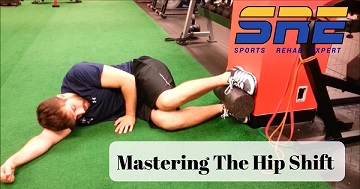
It's a low level activity which many people struggle with either obtaining the position or demonstrating optimal control over. It's a movement which we should be able to perform on both sides in order to effectively perform reciprocal motion....keep reading
- Hamstring Dominance
Brijesh Patel MA, CSCS A great article from Brijesh Patel, assistant strength and conditioning coach at Holy Cross. He does a great job of explaining functional anatomy and efficient movement at the hips. Even though it is directed toward training it can absolutely be used in the clinic. Any Austin Powers fans out there? You'll appreciate this....keep reading
- Exercise of the Week - Retro Step Up
Joe Heiler PT, CSCS I recently posted an exercise of the week video for the PRI standing posterior capsule stretch which turned into a discussion on hip internal rotation mobility versus stability deficits. I talked a bit about the retro step up but didn't have a good video or explanation to go along with the discussion so I wanted to get that up here....keep reading
Displaying Matches 581 thru 600 of 1468 Found FIRSTBACK NEXTLAST