

Most Popular Articles on this site
Reader Favorites
The list shows the most widely read articles on this site.
- Human Assessment Mastery Course Discount

Master the Most Time Consuming Part of Treatment to Efficiently and Reliably Pinpoint the Primary Pain Generator and Establish an Effective Plan of Care!...keep reading
- Exercise of the Week - 1/2 Kneeling 3D Hamstring Stretch

Andy Barker PT Very rarely do we actually 'stretch' muscles the right way. Usually we use uni-planar stretching techniques and as such we only stretch muscles in one plane, as such we are missing the other two planes. By ensuring we stretch muscles in three dimensions we are maximising the muscles ability to lengthen....keep reading
- 5 Common Areas Lacking Stability Confused with Mobility
Erson Religioso III DPT, MS, MTC, CertMDT, CFC, CSCS, FAAOMPT One of the tenets of the SFMA is looking for issues with motor control/stability, if a joint loses mobility after repeated manual techniques, it is very possible there is an underlying MC issue. These are the clinical presentation I see most often presenting as "tight" but have significantly greater ROM when tested passively, often in an unloaded position....keep reading
- Dynamic Neuromuscular Stabilization - Course Highlights
I'm out at Azusa Pacific University (outside LA) taking the Level 1 Dynamic Neuromuscular Stabilization (DNS) course taught by Clare Frank and Lucie Ujcova from the Prague School of Rehabilitation. It's a three day course so I'll try to get each days notes up as quick as I can....keep reading
- Partial Reps: The RDL
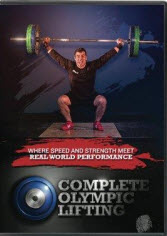
Wil Fleming This is a great article from Wil on the RDL and training the hip hinging pattern, as well as how do you know when to stop? We had a great conversation about this a couple years back when I took the USAW coaching course with Wil and some of Mike Robertson's guys so it's great to see him write something up about it. It's definitely changed the way I teach the hip hinge as part of the RDL, deadlift, swing, and the O-lifts. Wil has also put together a DVD - "Complete Olympic Lifting" so I've linked to that as well. Wil has a unique way of breaking down the O-lifts so that they are easier to teach....keep reading
- SFMA - Multi-Segmental Flexion Corrective Exercises

Joe Heiler Been forgetting to get the previous SFMA corrections up. They've been in the download area but I keep getting asked when they will be available so here you go. Feel free to use them for home programs or anything else....keep reading
- Functional Movement Systems/SFMA Internship 2010 Highlights

I've got the flow sheet updates from the second day in Evansville so check those out. I'll be cranking out a whole lot more this weekend including some cervical treatment videos so keep checking back for more on the 2010 Functional Movement Systems internship. FYI, Gray's book is going through it's first publishing right now and should be available in a couple weeks....keep reading
- Hamstring Rehab
Robbie Bourke CSCS, NMT Here's a nice case study from Robbie, working with a 19 yo Gaelic Football player with an acute hamstring strain. He has only 6 days to get him ready for the next competition so a great look into how he combines rehab with return to sport activities. And using movement patterns as markers for success....keep reading
- It's Motor Control Stupid
This was a video that Kyle Kiesel sent to me after the interview I did with him a couple weeks ago. I wanted to share this with all of you because it really got me thinking, "how often am I trying to strengthen with less than great results when all I really need is a little better input?"...keep reading
- Proximal Stability for Distal Mobility - The Bird Dog
Seems like I've been getting a lot of questions lately on teaching the bird dog: what muscles are you working?, what position should I start in?, how high do I lift the leg?, and so on. Well I've found the perfect instructional video from Dr. Craig Liebenson that I will be linking to from now on....keep reading
- Shoulder Impingement - Part 1

Eric Cressey MA, CSCS Impingement….Yes, We Get It. Roughly 10-15 times per week, I get emails from folks who claim that they have shoulder "impingement." Honestly, I roll my eyes the second I read these emails. Don't get me wrong: I'm not making light of their pain. It's just that it drives me crazy when doctors throw this blanket statement out there. I will be completely and 100% clear with the following statement: Impingement is a physiological norm. Everyone -- regardless of age, activity level, sport of choice, acromion type, gender, you name it -- has it....keep reading
- Manual Therapy Technique of the Week - Treating the Supraspinatous
Joe Heiler PT I've become much more familiar with trigger point referral patterns and treating these out the past couple years since taking the Kinetacore Functional Dry Needling course. Last month I talked about trigger points in the posterior rotator cuff (Infraspinatous and Teres Minor) along with their common referral patterns. Another common shoulder muscle to find active trigger points is the supraspinatous. Active trigger points in this muscles can refer pain to the deltoid and down the lateral aspect of the arm....keep reading
- Core Competencies
Carson Boddicker In the world of strength and conditioning, core competency is a specific factor that is central to the way athletes function and are trained. Simply put, these core competencies are to be developed first and foremost in athletes of any discipline before even beginning to look to other movements and training interventions. To be termed core competencies, they must also provide benefit to the athlete that few other methods are capable of replicating and also provide benefits for a number of movement dysfunctions. As I see it, there are two core competencies to be addressed with every athlete or client regardless of discipline. Unquestionably, these two core competencies are breathing and rolling patterns. That's right, breathing and rolling....keep reading
- What I Learned This Summer - Part III
Joe Heiler PT In this article I want to discuss a few tricks we use to work on getting our athletes more upright with their corrective and strength training exercises. Going from the floor to upright is not always easy, and sometimes a disaster, for those who don't motor plan well. So here are a few progressions that will apply to your athletes as well as patients....keep reading
- Self Treatment Technique - Lumbar Decompression Hang

Andy Barker PT Given the ever increasing numbers of extension based back pain patients coming through my clinic I've been working on additional ways to help such patients. Recently I had a patient who had a long history of lower back pain, usually exuberated by barbell squatting and deadlifting. With a bit of cueing and coaching we were able to clear up his deadlift pattern. The squat however, was much harder.......keep reading
- Leukotape Technique + PRI

This is a combination of a leukotape technique that we have featured on the site before from Gray Cook. Combined with some PRI based treatment methods....keep reading
- Manual Technique of the Week: IASTM and Functional Release of the Fibular Head
Erson Religioso III, DPT, MS, MTC, CertMDT, CFC, CSCS, FAAOMPT Having problems restoring a patient's ankle dorsiflexion? The problem may be higher than the talocrural and subtalar joints! The fibular head should glide antero-laterally when performing dorsiflexion whether it's open or closed chain. I had a request on the EDGE Facebook page for this technique. Ask and you shall receive!...keep reading
- Using Rolling to Develop Neuromuscular
Control and Coordination of the Core and
Extremities of Athletes
Barbara J. Hoogenboom, PT, EdD, SCS, ATC; Michael L. Voight, PT, DHSc, OCS, SCS, ATC; Gray Cook, MSPT, OCS; Lance Gill, MS, ATC. This is a great clinical commentary in the North American Journal of Sports Physical Therapy on using rolling patterns as assessments and treatments, neurodevelopment and motor patterns, PNF, and more. Some great pictures of different techniques too including the Starfish movements....keep reading
- Soft Tissue Techniques for The Erector Spinae in Anterior Pelvic Tilt
Patrick Ward MS, CSCS, LMT Anterior pelvic tilt is a posture characterized by increased tightness of the hip flexors/lumbar erectors and weakened hip extensors/abdominals. This pelvic position is what Dr. Vladimir Janda classified as "lower-crossed syndrome". In this video, I offer two techniques for addressing the erector spinae musculature (which act as a force couple with the hip flexors in an anterior tilt). These techniques require the client to be active during the treatment process, which helps them to learn what it feels like to move their pelvis between both anterior and posterior pelvic tilts....keep reading
Displaying Matches 641 thru 660 of 1468 Found FIRSTBACK NEXTLAST