

Most Popular Articles on this site
Reader Favorites
The list shows the most widely read articles on this site.
- Movement Dysfunction Conference - Shirley Sahrmann Pre-Con Notes

David O'Sullivan This is the third set of notes from the Movement Dysfunction Conference in Edinburgh back in October of 09'. Not sure the title of the talk but all kinds of great information on movement impairment syndromes of the hip....keep reading
- Exercise of the Week - Cervical/Lumbar Postural Correction
Correcting forward head posture has been a topic lately on the forum and the podcast so thought I'd show you one of my favorite ways to address this early on in the process. This is a standing version of the correction and just one of those things you have to try yourself to see how difficult it can really be....keep reading
- Audio Interview with Steve Pucciarelli - Z Health
Steve discusses the Z Health perspective and the pain neuromatrix, the different training levels, how he incorporates it with the SFMA/FMS, the role of vision in performance, and some great reads to learn more about the CNS and pain....keep reading
- Manual Technique of the Week - TFL Releases
Joe Heiler PT, CSCS This is part II in the series on soft tissue techniques to address the musculature of the hip, and in today's video I'm going to focus on the TFL. As most of you probably already know, the TFL is very often high tone and a major player in loss of hip extension......keep reading
- The Overhead Lunge Walk: My Favorite "Catch-All" Assessment

Eric Cressey
We spend a good chunk of our lives standing on one-leg. Obviously, that means we need to train on one leg, but it's also important that fitness professionals and rehabilitation specialists assess folks when they're in single-leg stance, too. Enter the overhead lunge walk, which is likely my favorite assessment because of just how comprehensive it is....keep reading
- Is Scapular Stability a Myth?

Mike Robertson Mike Boyle is well-known for popularizing the joint-by-joint approach to training. The premise is simple: The major joints in your body alternate or flip-flop with regards to whether they need more mobility training, or more stability training. According to the joint-by-joint, the ankle typically needs more mobility, so the joint above (the knee) and the joint below (the foot) need more stability-focused training. If we follow the joint-by-joint approach to the scapulae, it tell us that the scapulae needs more stability, so the joints above and below (i.e. the thoracic spine and shoulder) need more mobility. But as with all things, I just don't think the answer is quite that black and white....keep reading
- Eclectic Strategies for Improving Hip Motion - Videos from the Webinar
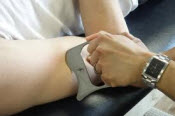
Dr. Erson Religioso III DPT, MS, MTC, CertMDT, CFC, CSCS, FAAOMPT Big thanks to Dr. Religioso for going back and shooting a video of all his techniques from the webinar last week. He presents some great strategies for improving hip motion, and addressing common complaints such as piriformis syndrome, hip flexor strains, and more......keep reading
- SportsRehabExpert.com presents - Michael Mullin
I've had Michael on in the past talking PRI basics and working with skiers, and now this time around he's going to discuss the in's and out's of working with dancers. Michael talks about the unique stresses and common injuries seen in dancers, takes us through his evaluation process, talks about his rehab approaches, and also discusses injury prevention and training strategies....keep reading
- Manual Therapy Technique of the Week - Treating the Vastus Lateralis
Joe Heiler PT I have a tendency to talk about treating trigger points within a particular muscle due in part to how I've been trained in the past. I hesitate to say Vastus Lateralis trigger points in this case because I don't usually see active referral of symptoms to the lateral knee as often as I see this muscle in an overall state of high tone....keep reading
- Belly Breathing vs. Chest Breathing
Kevin Neeld has written a few articles lately on breathing including comparing techniques and how proper breathing can affect a variety of sports performance factors. I had Kevin on a couple months back talking about breathing plus a number of other topics on his Optimal Movement DVD, but I wanted to post these since he gets more in-depth with techniques and how he uses breathing with athletes. Needless to say there is still quite a bit of confusion out there about what is considered proper breathing (I know I've been there) so hopefully Kevin's articles will help to clear some things up......keep reading
- Exercise of the Week - Adductor Plate Slide with Lateral Lunges

Andy Barker PT I identified an adductor magnus issues with one of the athletes I have been working with recently. He'd had some recurrent hamstring and adductor longus injury/tendonoptahy patterns over the last couple of seasons. Whilst he'd not missed much in the way of training and games he felt as though he was not hitting his straps; namely lacking top end speed....keep reading
- Movement System Impairment Syndromes of the Extremities, Cervical and Thoracic Spines - Book Review Part I
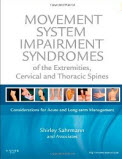
Many of you on here are quite familiar with Dr. Sahrmann's work, and her first book which discussed Movement Impairment Syndromes (MIS) of the hip, shoulder, and lumbar spine. This book is no different in its quality, and I can guarantee it will be sitting on the desks of many rehab professionals as a 'go-to' reference. So as I work my way through it, my plan is to write a review of each chapter. This will hopefully help everyone's understanding (I know it will mine) so looking forward to doing this. For those of you already through it, or working on it, hopefully this can generate some good discussion....keep reading
- Exercise of the Week - Side Plank with Hip Adduction
Joe Heiler I was going through my video files looking for a good one for the exercise of the week. I decided on the side plank with hip adduction because of what Kevin Neeld and I talked about in our interview concerning groin pulls, and after watching my daughter perform stretch after painful looking stretch so that she can do the splits in gymnastics....keep reading
- Lessons Learned Part I
Joe Heiler PT, CSCS One of my former students recently asked me the question: "what are you doing differently now than you did a few years ago"? There are a number of techniques or exercises I've used in the past that I don't use as much anymore as I've learned new techniques and hopefully gained a better appreciation for the movement system. Please don't misunderstand me and think I would never use these techniques or that they have no place in rehab or training. I hope to write a few articles on this topic, and in this first article I'm going to highlight how I would address and treat hip mobility dysfunction now versus then....keep reading
- Ankle Instability: Rest vs Early Mobilization
Ankle sprains occur routinely from sports such as basketball to merely stepping off a curb you don't know is there. Traditional care states to rest it & "let pain be your guide". Is this accurate? A review of the literature from 2008 asked about the role of balance training in prevention, acute care & chronic rehab. They came to the following conclusions:...keep reading
- Webinar - Neurophysiological Mechanisms of Manual Therapy with Dr. Ken Cieslak
Ken Cieslak D.C., ATC, CSCS Manual therapies, including manipulation and soft tissue release, are recognized as being effective modalities to improve tissue function and control pain, but there continues to be confusion as to the exact mechanisms by which they work to elicit their positive treatment effects. Myths persist that cloud the clinician's ability to appropriately identify which manual approach would best apply in a given treatment program. This presentation will address the latest research and theories as to both the mechanical and neuro-physiological mechanisms by which the most popular manual therapies work, and empower the clinician to choose the best therapeutic intervention by applying an evidence-based approach....keep reading
- A Novel Ankle Mobilization For The Sensitive Patient

Try this alternate method for ankle dorsiflexion with the sensitive patient. Recently I have been treating a young former college athlete who was involved in a motor vehicle accident. Following ultra conservative care for her left ankle sprain the patient has severely restricted ankle dorsiflexion....keep reading
Displaying Matches 801 thru 820 of 1468 Found FIRSTBACK NEXTLAST