

Most Popular Articles on this site
Reader Favorites
The list shows the most widely read articles on this site.
- My TPI Homework! - Swing Faults

One of the key points of the TPI level 1 conference was that you must build a team to be successful in the world of golf. That team includes the medical professional and strength coach, but also the golf pro. I wanted to introduce the swing faults for the reason that we need to learn to speak their language. If we want referrals from the golf pro, we had better know what we are talking about and how it may affect ball striking. It's not our jobs to teach swing mechanics, but we can certainly make the pro's job that much easier by restoring mobility and stability where it is needed most....keep reading
- Rehab Exercise of the Week - Soleus Isometric Calf Raise

Andy Barker PT Whilst the majority of 'calf' injuries I see involve solely gastrocnemius, recently I have seen an increasing number of soleus injuries. With these soleus injuries as part of their rehab I have had some good success using a seated isometric calf raise. This exercise is the same set up as a 'donkey calf raise' and I'll use this exercise as early as possible in rehab....keep reading
- Webinar - The Aging Golf Athlete

John D'Amico TPI-CGFI MP3 MSPT, M Ed, ATC The ability to optimize the health and fitness of individuals as they age hinges upon a strong understanding of how the older client differs from their younger peers. The Aging Golf Athlete Webinar will arm you with an understanding of the physical changes that occur as we age and how to tweak the training protocols you currently use to optimize your older clients potential. The information in this seminar can be applied to all athletic activities that older clients take part in....keep reading
- Three Wall Exercises to Improve Performance Part 2
Brian LeRiche CSCS The wall is generally an overlooked tool to utilize in a performance or rehab setting. The continuous feedback gives the athlete a sense of position, tension, and compensation. Furthermore, these methods can be applied in a variety of situations from the novice to professional athlete. With that said, here's three exercises that can be moved to the wall in order to maximize results....keep reading
- Exercise of the Week - Thoracic Extension Mobilization and Self Mob
Joe Heiler Time for another 'Exercise of the Week' so this time around I've got a mobilization and a follow up self mob. I really like this one much more than the old foam roller as lumbar motion is better controlled, and it's simple to do as part of a home program....keep reading
- Rehab Circuit - Hallux Mobility Circuit

Andy Barker PT Much of this work has to be credited to the guys at Anatomy in Motion. Since studying their content I have used a lot of their material within the rehabilitation and prehabilitation settings. This video shows three different exercises aimed at improving mobility in three planes of movement.....keep reading
- SportsRehabExpert.com Presents - Interview with Mike Cantrell
Mike is one of PRI's top instructors and in this interview he goes in depth on the MyoKinematics course plus answers some frequently asked questions about the PRI model, hip asymmetries that don't seem to fit a pattern, scoliosis, using a balloon to improve breathing, what type of 90/90 hip lift to use, and a whole lot more......keep reading
- Anti-Rotational Leg Slides Series - Optimal Prevention and Rehabilitation for Lumbopelvic Dysfunction

Dave O'Sullivan The series of exercises below aimed specifically at addressing lumbopelvic imbalances came about after a visit to see leading UK Groin Surgeon Mr Ian MacLennan with one of my players who was diagnosed with a bilateral inguinal hernia. Pro Sport Physiotherapy has since designed a systematic progression series to attempt to rectify significant imbalances in the lumbopelvic region. Mr MacLennan is a leading surgeon in his field and takes care of premiership footballers and rugby players among other elite athletes in their respective sports in the UK. Mr MacLennan performed an interesting test in crook lying and attempted to rotate the players pelvis by pushing on his knees while he was instructed to perform an isometric contraction....keep reading
- Exercise of the Week - Upper Limb Arm Clock

Andy Barker PT This can double up as a 'core' exercise but I generally use this as an upper limb rehabilitation exercise. Its great to use to encourage rotation and as the body is rotating on a fixed shoulder/arm for this reason this exercise is relatively shoulder friendly....keep reading
- SRE Members Only VIP Group

Please share questions, topics, clinical cases, ideas, and issues you would like to discuss further inside the group. Everyone can chime in so long as they are respectful and understanding that everyone comes from a different knowledge base and background. Furthermore, everyone is progressing along different timelines as far as their skillset is concerned. If someone asks a question, just remember you very well could have been searching for that answer 5 years ago....keep reading
- Webinar - Eclectic Strategies for Improving Hip Motion
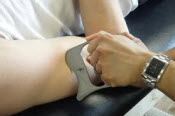
Erson Religioso III DPT, MS, MTC, CertMDT, CFC, CSCS, FAAOMPT Dr. Religioso III will discuss a variety of manual therapy techniques, including joint mobs, functional release, IASTM, and neurodynamics, to improve hip mobility, and how you can use these strategies to address common musculoskeletal disorders such as piriformis syndrome, hip flexor strain, and more......keep reading
- Buffalo Concussion Treadmill Test Protocol
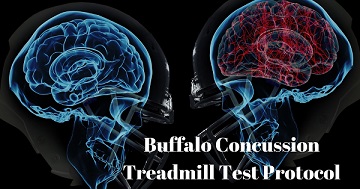
The importance of concussion management is at an all time high. Here is a test that is commonly used (Buffalo Concussion Treadmill Test) to look at aerobic work capacity post concussion....keep reading
- A Different Way To Perform TKE
This is a new variation that I have recently started using more often early on post op from ACL repair as well as some clients after partial/total knee replacement....keep reading
- Lower Back Savers
Eric Cressey Sooner or later, you're going to tweak your back, and there's nothing you'll ever experience, perhaps shy of limb dismemberment, that'll put a stop to your training as cruelly or effectively. Of course, if you've already had some back problems, you know what we're talking about. Either way, we recommend you bone up on the back. It's one complex little beastie....keep reading
- Exercise of the Week - Side Lying Straight Leg Raise

Joe Heiler PT, CSCS
This is one of the 'pearls' I picked up from my time with Gray, and down the road a bit I'll be posting a video demonstrating how exactly he used this tweak to the Active Straight Leg Raise to treat a patient with low back and hip pain....keep reading
- Exercise of the Week - Barbell Single Leg Skier Squat

Andy Barker PT Something I picked up from one of the strength and conditioning coaches I work with. I've made a couple of subtle changes from the version I first saw. I put a big emphasis on feeling the floor of the working leg to ensure you are getting true hip extension and not compensating with excessive lumbar side flexion....keep reading
- Strength Training for the Shoulder: Should Throwing Athletes Lift Weights Overhead?
Robert Panariello MS, PT, ATC, CSCS Should throwing athletes lift weights overhead? During the Rehabilitation and Performance Training of throwing athletes, especially baseball players, this is a common concern often expressed by both players and coaches. The specific baseball athlete where this topic appears to generate the greatest concern is the pitcher. The apprehension displayed by both coaches and players, is due to their fear of the possible adverse effect of this type of overhead training on the shoulder, and more specifically the rotator cuff, and throwing performance. Prior to determining if this type of strength training is not only safe, but of benefit to the throwing athlete, it is necessary for the rehabilitation/sports performance specialist to understand shoulder anatomy and biomechanics, as well as the performance of overhead strength training....keep reading
- SFMA - Multi-Segmental Extension Corrective Exercises

Joe Heiler Here are those SFMA MS Extension Corrections. They've been broken down into hip flexor stretches, bridging progressions, and tall and half kneeling chops/lifts for convenience....keep reading
- Exercise of the Week - 90/90 Pallof Press

Andy Barker PT The pallof press is a commonly used anti-rotation exercise used within both rehabilitation and training settings. One commonly produced error that I often see is that athletes brace predominately through their spinal erectors. More often than not it is these muscles that are already short and tight and contributors to the common extension pattern we commonly see....keep reading
- Joint Centration and Shoulder Stabilization
Joe Heiler PT, CSCS I had planned on waiting awhile to get to this topic but since Charlie Weingroff did such a great job with it at this past weekend's course, I figured no better time than the present. So what I've seen the past 10 years or so, and have been guilty of myself, is trying to fix this scapular 'dyskinesis' thing by teaching retraction and depression of the scapulae. "Down and back" with everything!. Well here are a number of reasons from Charlie, plus a couple nice videos from Dr. Evan Osar showing why that is not such a great idea....keep reading
Displaying Matches 481 thru 500 of 1468 Found FIRSTBACK NEXTLAST