

Most Popular Articles on this site
Reader Favorites
The list shows the most widely read articles on this site.
- SFMA - Multi-Segmental Extension Corrective Exercises
This month I'll be posting the corrections for the Multi-Segmental Extension pattern, a.k.a. the back bend, from the SFMA. What we're looking for is the mobility and stability through the ankles, hips, spine, and shoulders to perform a backward bend without pain, right to left asymmetry, or over exertion. The article will cover what to look for in the assessment and also the manual strategies and corrective exercises used to address a dysfunctional pattern. The corrective exercise videos with patient and clinician instructions are available in the download area. Printable home program PDF's will be up soon....keep reading
- Importance of Preframing In Business

The importance of setting expectations and preframing the outcome early on in a patient lifecycle to improve clinical and business outcomes....keep reading
- SFMA - Multi-Segmental Flexion Corrective Exercises
Joe Heiler My plan over the next few months is to get tutorials and videos up dealing with each of the movement patterns of the SFMA. First up is the Multi-Segmental Flexion pattern, a.k.a the toe-touch. As has been mentioned on here before, its about way more than just hamstring length. What we're really looking at is can the person close down all their joints into a fully flexed position with the appropriate amount of stability to touch their toes....keep reading
- Can An Athletes Achilles Rupture Be Avoided? Or Is It Just A Matter of Time?

We seem to be hearing more and more about athletes who rupture their Achilles? Is there considerations we can make to reduce the likelihood, or is it just a matter of time?...keep reading
- Shoulder Impingement - Three Keys to Assessment and Treatment
Mike Reinold PT, DPT, SCS, ATC, CSCS Impingement really is a pretty broad term that most of us likely take for granted. It has become much of a junk term, such as "patellofemoral pain." The use of nondescriptive terminology, like "impingement," is fine when describing the injury to the general public, but as professionals, it is in our best interest to be as descriptive as possible to assure to assess and treat the person appropriately. There is no magical "impingement protocol" that you can pull out of your notebook and apply to a specific person....keep reading
- Updated Multi-Segmental Rotation Correctives

Joe Heiler PT, CSCS This is my current thought process/flow sheet when it comes to treatment options for the MS Rotation pattern of the SFMA. You'll notice the mobility corrections are fairly vague as I think you can use any number of different techniques to address the areas listed. I've also updated the corrective exercises I would consider based on where they would fall in the neurodevelopemental sequence and 4x4 matrix rather than what I'm trying to 'fix'....keep reading
- Sports Rehab Expert Featured on Iron Lounge Radio

Recently I was featured on the Iron Lounge Radio Podcast, take listen to this 45min interview...keep reading
- Audio Interview - Gray Cook updates the Joint by Joint Approach

Anthony Renna asked Gray to update the Joint by Joint Approach a few months back on the Strength Coach Podcast. Ask Gray a question, get a 30 minute answer. Kidding Gray! It was a fantastic explanation and really takes you through his thought process so I annoyed Anthony enough he finally let me use it. Anyway, this is a must listen interview and I absolutely wanted to be able to share it with all of you....keep reading
- Teleseminar Interview #4 - Thomas Myers + Bonus Interview with Chris Poirier from Perform Better
Thomas Myers discusses his concept of 'Anatomy Trains' and his approach to soft tissue treatment, how well do self myofascial release techniques really work (i.e. foam rollers, stick, balls), his ideas on corrective exercise to restore mobility and stability, and gives some great examples of how certain muscle groups may have a much different role than what we all learned in school. Thomas Myers is one of the best in the world when it comes to soft tissue work and functional anatomy so don't miss this!...keep reading
- SportsRehabExpert.com presents Dave Hancock
Dave is the Director of Training and Conditioning for the New York Knicks, and has extensive experience in professional soccer and rubgy in the UK as well. In part I of my interview, Dave talks about his unique position with the Knicks, how technology is advancing the ability to monitor player performance all the way from rehab to returning to play, the future of technology and how it can be applied in various settings from professional sports to smaller clinics, and we touch on Mark Comerford's work and his Kinetic Control screening system.....keep reading
- Hamstring Rehab Part 3 (Dynamic Phase)

Greg Schaible PT, CSCS This is Part 3 and the final installment of our hamstring injury loading progressions after injury. This particular phase will focus more on dynamic exercises as you are starting to gear towards returning to play most likely.|Image1|...keep reading
- Headaches With Pushups

In this episode of the Sports Rehab Success Show I discuss a recent case I had in the clinic. The client was having frequent intense headaches which were provoked by exercises such as pushups, bear crawls, pullups and the rowing machine....keep reading
- Webinar - Kinesiology Taping Strategies: Enhancing Movement for Rehabilitation and Performance
Chris Nentarz Our rehabilitation and performance training methods should strive to find the place where optimal movement patterns produce powerful, efficient force. Therefore, the core of our techniques should consist of assessing and intervening on movement based dysfunctions. Kinesiology taping is a recognized therapeutic intervention that, when used appropriately, can be an effective and efficient way to enhance our client's and patient's motor abilities. In this webinar, Chris will discuss the foundational principles and advanced methods of kinesiology taping that will allow you to re-write your clients movement programs and improve your clinical results....keep reading
- Shoulder Pain with Wall Slide and Ys
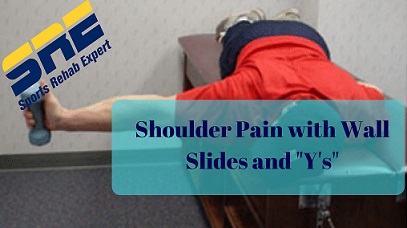
New Case Study: Shoulder pain with wall slides and Y raises can be common. Here is a case study of how we modified the exercise to make it pain free for the client....keep reading
- SFMA - Deep Overhead Squat Corrections

The Deep Overhead Squat is last on the list when it comes to the SFMA hierarchy, and also traditionally last on the FMS as well (there are exceptions). The reason being is because it involves pretty much every joint in the body so there is so much that can go wrong. And trying to narrow it down to a specific impairment just breaking out the squat is often an exercise in futility. That is why we attack other non-painful dysfunctional patterns first. Or as in the case of the FMS, the little 4 come first....keep reading
- How to Increase Referrals and Retention Rates for your Physical Therapy Clinic or Gym

How to use a book to increase referrals and gain retention for your physical therapy clinic or gym...keep reading
- The Selective Functional Movement Assessment - Where Should I Begin?

Joe Heiler PT, CSCS Where Should I Begin? This literally has been the question asked for years about which pattern to address first within the SFMA. Should one just follow the hierarchy (begin with the cervical spine and work in order as needed to the deep overhead squat), or should one attack the biggest dysfunctional non-painful pattern? I know I'm not alone in contemplating this question, and many times have second guessed the treatment path I chose with a particular patient. Well lucky for us, there is plenty of redundancy built into the SFMA so even if we happen to chose the wrong pattern, chances are we will still end up in the right place at the right time....keep reading
- Exercise of the Week - Hip Adductor Isometrics
Kevin Neeld This week's exercises come from Kevin Neeld who I had on here not too long ago talking some hockey training and injury prevention so be sure to check that one out. These are the multi-angled isometric hip adductor strengthening exercises Kevin uses as part of his injury prevention protocol....keep reading
- John Rusin 2017 Sports Rehab to Performance Teleseminar Interview
Dr. John Rusin is well known around the world for his strength training methods and combining training and rehab into a high performance model. In this interview we will talk in depth on some of his assessment processes and how this leads him to programing for optimal health and performance. We also will cover some of the "why" and "how" for specific topics that include single leg training, shoulder movements, and ramp up sets that John commonly will place in programs....keep reading
- Principles of Neuromuscular Rehabilitation

David O'Sullivan In the last few years I have changed the way in which I design and deliver rehabilitation programs and this article is to help me clarify my thoughts on paper if nothing else. I went through the first stint in professional sport thinking if I could get people activating muscles with exercises such as band walks and glute bridges that this would solve everything as had been portrayed through the internet waves by some. I quickly learned that this was not enough and then almost went the other way where I was getting people pain free just from soft tissue work alone without having to rely heavily on rehabilitation....keep reading
Displaying Matches 341 thru 360 of 1468 Found FIRSTBACK NEXTLAST