

Most Popular Articles on this site
Reader Favorites
The list shows the most widely read articles on this site.
- FMS Unplugged - Episode 5: Cook-ing the ASLR

Gray Cook and Jeff O'Connor team up for another episode of FMS Unplugged, this time focusing on additional ideas for the ASLR correction. Gray notes often times an individual's weakness isn't in their posterior tension but actually in the fact that they cannot engage. He believes the kettlebell is the best self help, considering it adds rotation under tension to the ASLR correction....keep reading
- SportsRehabExpert.com 20 Biggest Ideas - Part 2 - Restoring Ankle Dorsiflexion
Joe Heiler PT, CSCS The importance of ankle dorsiflexion is well documented on the site, and there have been a number of videos posted over the years showing a number of different techniques to improve mobility. I'll review that a bit but what I really want to focus on is the clinical decision making process I use to decide which technique will be most effective for the person standing in front of me......keep reading
- Exercise of the Week - Reach-Roll-Lift
Joe Heiler PT, CSCS The reach-roll-lift is a great way to work the stabilizers of the scapula, particularly serratus and lower trap together. It's a favorite of Gray's from the "Secrets of the Shoulder" DVD, as well as Eric Cressey as a warm-up/pre-hab in his book "Maximum Strength"....keep reading
- The Best Single Leg Squat: Knee Tap Squats

Nick Tumminello At Performance University -- If you ask us what is the best type of single leg squat? We'll answer: "Knee Tap Squats!" We use knee tap squats for our performance athletes because it resembles the body positions (i.e. joint angles) and force generation patterns of common sporting positions we see in field, court and combat sports. We use knee tap squats for our physique athletes because it allows them to improve their muscular symmetry while performing an exercise, which resembles their optimal double-leg squat form. The knee tap squat is also our favorite single leg squat application for fitness clients.....keep reading
- Anterior Femoral Glide Syndrome
Marc Heller DC Here's a good one from SRE member Dr. Heller looking at Anterior Femoral Glide Syndrome and the role of the psoas (I doubt its what you were taught in school). Some good food for thought plus a few subtle techniques to train the psoas as a stabilizer....keep reading
- Exercise of the Week - Banded Step Ups

Andy Barker PT This is a great plyometric step up variation that I have found useful both within rehabilitation and as a general training stimulus. I cue the athlete to start in a 90-90 (hip and knee) position in the aim to pre-load (stretch) the extensor chain prior to the step up. Additionally using this starting point athletes report being able to produce more force once they make box contact into the step up....keep reading
- Exercise of the Week - 4 pt. Thoracic Rotation
Joe Heiler PT, CSCS We all now know how important thoracic mobility is to optimizing lumbar and shoulder stability. 4 point thoracic rotation is another method of enhancing mobility and is perhaps the most convenient of the bunch especially when working with groups....keep reading
- Athletes' Performance - Rehab Specialist Mentorship Program

Joe Heiler It's 50 degrees in Michigan and 88 in Arizona. Don't need much more of an reason to want to come back to the Phoenix area this time of year, and I get to take in the AP Rehab Specialist Mentorship Program over the next five days.! I'm going to be giving a review of each day's activities as I go along here. The emphasis of this program is on bridging the gap between rehab and sports performance so should be some great information coming out of this....keep reading
- Webinar with Wil Fleming - Practical Olympic Lifts: A model for trainers and clinicians

Wil Fleming Athletic performance coach Wil Fleming breaks down his favorite topic, Olympic lifts and presents a practical approach to teaching them. He addresses the assessment and skill set necessary to begin teaching the Olympic lifts as well as common mistakes every lifter makes and the ways to correct them....keep reading
- Why You Struggle to Train Overhead - and What to do About It
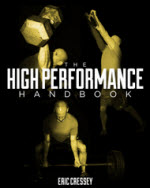
Eric Cressy wrote a great article last week discussing ways to accurately assess shoulder mobility, possible limiting factors, plus goes through a number of exercise based solutions. This has been a hot topic on the site lately so I figured why not add one more great piece to the discussion....keep reading
- MS Flexion Pattern Corrections (Updated 2014) - PDF Download
The 2014 updated version of the Multi-Segmental Flexion pattern corrections is now available to download. There are all of the stability/motor control corrections that I have used within this movement pattern. The corrections are in order only by neurodevelopmental progression. Feel free to download the PDF and use with your patients....keep reading
- Common Mistakes With Scaption Raises
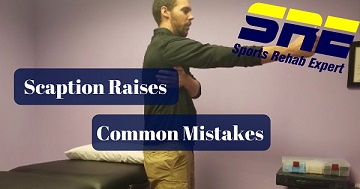
Scaption Raises are perhaps one of the most commonly used rotator cuff and scapula thoracic exercises. Simple. Effective. Useful. Three things I am a fan of!...keep reading
- Correcting Bad Posture: Are Deadlifts Enough

Eric Cressey has been on a roll lately with great articles about the deadlift so I wanted to post one more article from him pertaining to the postural benefits of this lift. I'm also including my deadlift progression for teaching proper technique. I've had great success with this from novice lifters through older patients teaching lifting mechanics so thought I'd share that here....keep reading
- Tennis (not Golfer's) Elbow for Golfers

Greg Rose DC, co-founder Titleist Performance Institute Golfer's get tennis elbow seven times more frequently than golfer's elbow - see why!...keep reading
- Manual Technique of the Week - Post-Surgical Knee Mobilizations
Joe Heiler The topic of knee mobility post-TKA came up on the forum a few weeks ago and I discussed using a variety of mobilization techniques in conjunction with soft tissue work to improve ROM without the traditional 'forcing' of ROM. I realize a few of the techniques I brought up were not on the site previously so I posted a quick video of the techniques in question. You can find those here as well as a link back to the forum post to give you some context...keep reading
- Exercise of the Week - Hip Crossover Mobilization
Joe Heiler PT, CSCS Here is another great mobilization for the hip that will increase external rotation quickly. A lack of hip mobility, or even worse yet asymmetrical hip mobility, can lead to a multitude of issues throughout the rest of the body....keep reading
- 5 Ways to Improve the Overhead Deep Squat
Dr. Erson Religioso III, DPT, MS, MTC, CertMDT, CFC, CSCS, FAAOMPT Erson is back at it again with some great manual techniques to correct the deep overhead squat: I mainly use the ODS test movement as a clearing screen closer to discharge rather than an initial movement. This is because so many things can cause dysfunctional movement. It could be anything from thoracic and lumbar mobility, to hip, knee, ankle mobility, or core stability/motor control issues. Part 1 is manual techniques I use to assist the ODS....keep reading
- Get Your Butt in Gear - Part I
Eric Cressey MA, CSCS and Mike Robertson MS, CSCS We need an appropriate balance between strength and mobility in our hips. This is true if we want to squat or deadlift more weight, jump higher or sprint faster. A world-renowned philosopher by the name of Coolio may have said it best: "You can't have da' hop if ya don't have da' hip!" It's no surprise that athletes in sports like Olympic lifting, powerlifting and sprinting have amazing overall development in both flexibility and strength of the hip musculature....keep reading
- Case Study - Improving Multi-Segmental Rotation and the Shoulder Medial Rotation Extension Pattern
Joe Heiler PT, CSCS I've put together a two part video case study using my 3rd year PT student as the subject. He is not in pain currently so technically he's more of a candidate for the FMS rather than the SFMA, but I wanted to show the thought process behind where I would begin and how I would choose to treat. Hopefully this turns out well and will be a good learning tool as I would like to be able to do more of these....keep reading
- Hamstring Return to Play Protocol - Part II

Andy Barker PT Part two of this series aims to progress treatment and rehabilitation beyond the acute phase and facilitate an athlete's return back into training based activity. Please note that many of the principles covered in Part one of this series should continue to be employed. In particular, importance to athlete's hydration, tissue quality, and the avoidance of provocative postures/positions should be employed....keep reading
Displaying Matches 721 thru 740 of 1468 Found FIRSTBACK NEXTLAST